

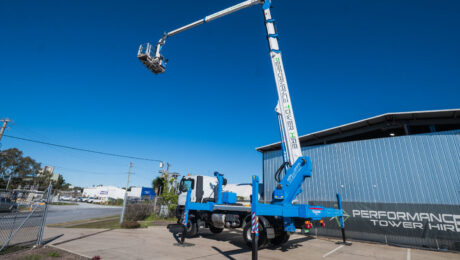
You’ve quoted the job, booked the cherry picker and got it on site. Then you realise it’s short on height, or the outreach won’t get you over the obstruction in front of it. Now you’re re-quoting, re-booking, and explaining the delays to a client who was told the job would be done today.
At Performance Tower Hire, we do all we can to avoid you under-speccing or over-speccing the cherry picker you hire for your working at heights job. Our team will chat with you about the specifics of the work, and match the machine to the job.
We do this because under-speccing when you hire a cherry picker is one of the most common and most costly mistakes on a job site. It comes about from a range of missteps, from incorrect measurements to overlooked site details.
Here are ten signs that you should double-check your numbers before the cherry picker turns up to your site.
1. You’ve spec’d to the exact height of the job with no buffer
Knowing the height of the parapet, gutter line, or fixing point is the right starting point, but it’s not the only thing. Operators need working room above and around that point to carry out their work – a height buffer makes it safer and easier to do this. If the cherry picker’s working height matches the job height exactly, there’s no margin left once you’re up there.
2. The job needs you to reach over an obstacle
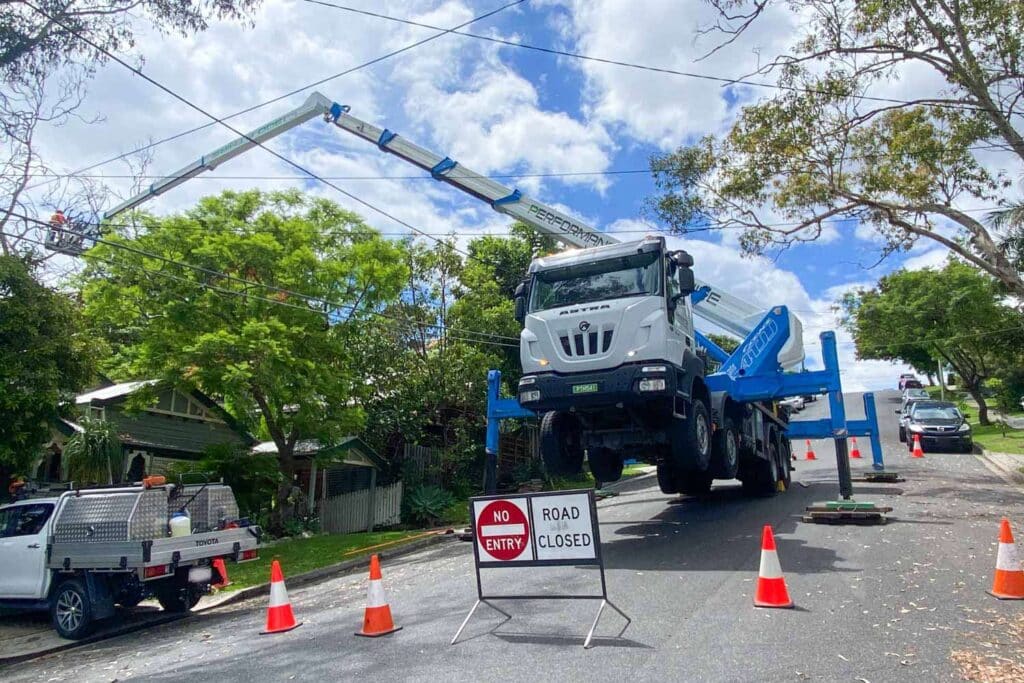
Power lines, awnings, fences, garden beds and other structures can all stand between your cherry picker and where the basket needs to be. If the machine has to stand off and reach out and over an obstacle, outreach is as important as working height. You don’t want a taller machine with a poor radius capability to turn up on site.
3. Your last hire was stretched to its limit
If a previous job needed the operator to stretch the boom to its limit, or the platform couldn’t sit where the work actually was, that’s a sign the spec was already too tight. You’re missing the buffer we discussed in Point 1. It’s definitely worth upsizing to a bigger cherry picker when you tackle the job again.
4. Site access restricts where the machine can set up
Some sites won’t allow the machine to park directly under the work area. Narrow driveways, gardens, live traffic, or other equipment already in place can all affect where you can park. When the machine has to work from further back, you need more radius and more height to cover the same job.
5. You’re working off old photos or plans and not a current site measure
Worksites change dramatically over time. Buildings get extensions, trees grow, structures get added. Don’t try and spec the cherry picker you need to hire based on last year’s site visit, or a set of plans that don’t reflect what’s actually there no. This is a common way EWP hire jobs end up under-quoted.
6. More than one person needs to be in the platform
What was thought to be a one-person job suddenly becomes a two-man job. It happens, but having two operators, or an operator plus materials and tools, in the basket changes what cherry picker you need. Platform capacity limits how much weight goes up, and a fully loaded platform can also affect outreach. Check the requirements of the job itself when you’re booking.
7. The job covers structures at different heights
Multi-level roofs, staged construction, or a site with more than one elevation point to cover are all part and parcel of working at heights. Here’s something to bear in mind – it’s more efficient to spec for the tallest point once than to bring a second machine back for the parts the first one couldn’t reach.
8. There’s no room for a second attempt
Some jobs are very timing-specific. Weather windows, live traffic management, event bump-ins, or approvals that only allow access on a set day can all mean the job has to get done on the day. If that’s the case, it’s worth having more machine than the bare minimum calls for.
9. You’re comparing machines on working height alone
Working height gets all the attention, but platform capacity and radius decide whether a machine can actually do the job once it’s on site. Two machines with the same height figure can perform very differently once outreach and load come into it.
10. The cost gap between “just enough” and “comfortably enough” is small
A bigger machine is often a modest difference in hire cost, especially against the cost of a wasted day, a re-quote, or a crew standing around waiting for the right gear to arrive. Sometimes it pays off to pay a bit more.
A Cherry Picker for Every Reach
Once the spec is right, the Performance Tower Hire fleet has a range of different size machines that can cover what you need to do. These include:
54 metres working height
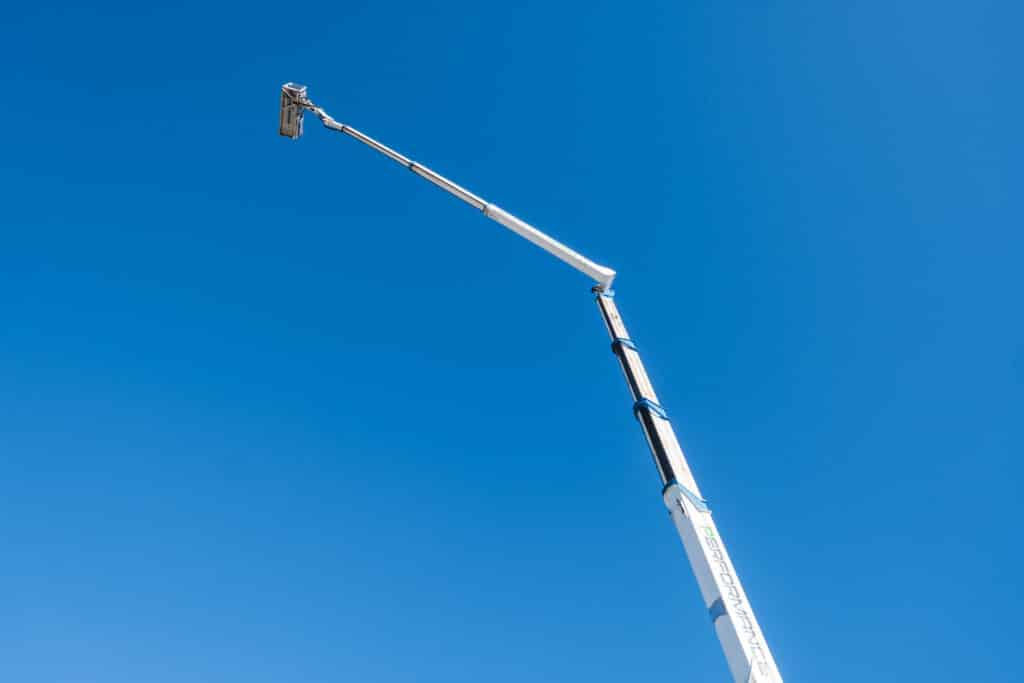
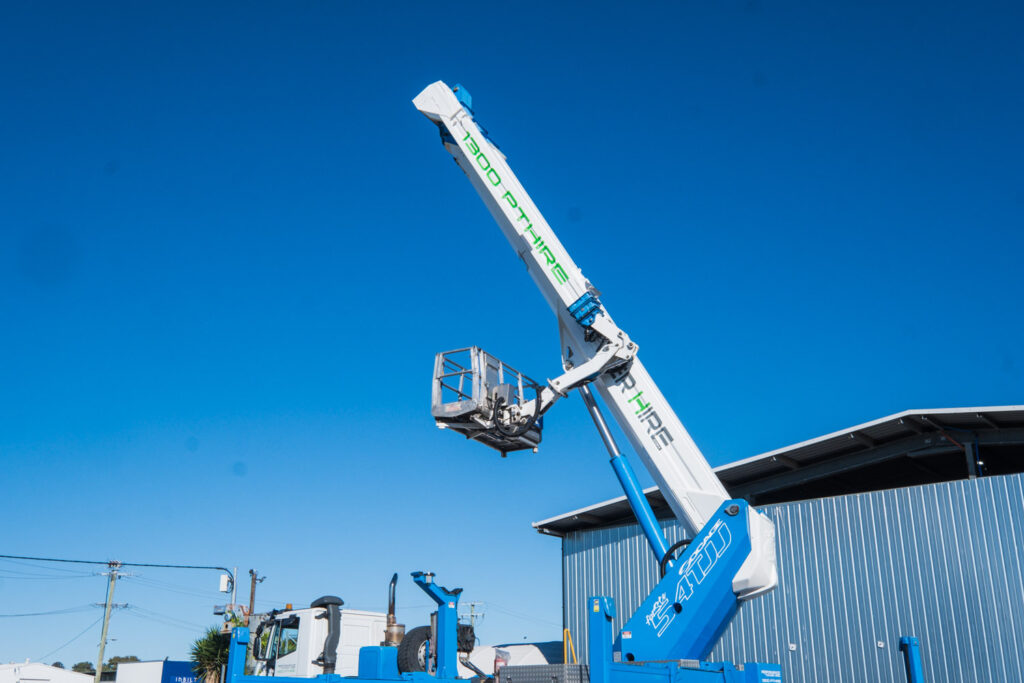
PTH541: 54m working height, 40m radius, 600kg platform capacity. The top of the fleet, built for jobs where nothing smaller will get you there — high-rise facade work, major infrastructure, and telco tower maintenance.
43 metres working height
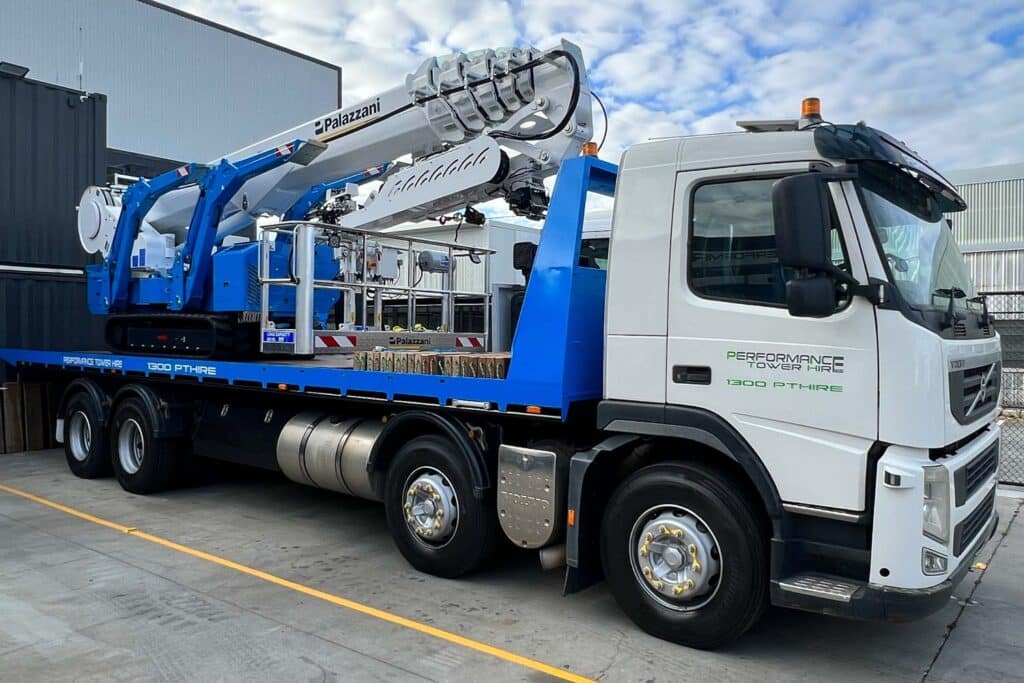
PTH431: 43m working height, 18m radius, Palazzani spider lift. Tracked rather than truck-mounted, so it sets up on uneven ground or in tight spaces where outriggers can’t spread out. A strong option when access, not height, is the limiting factor.
30 metres working height
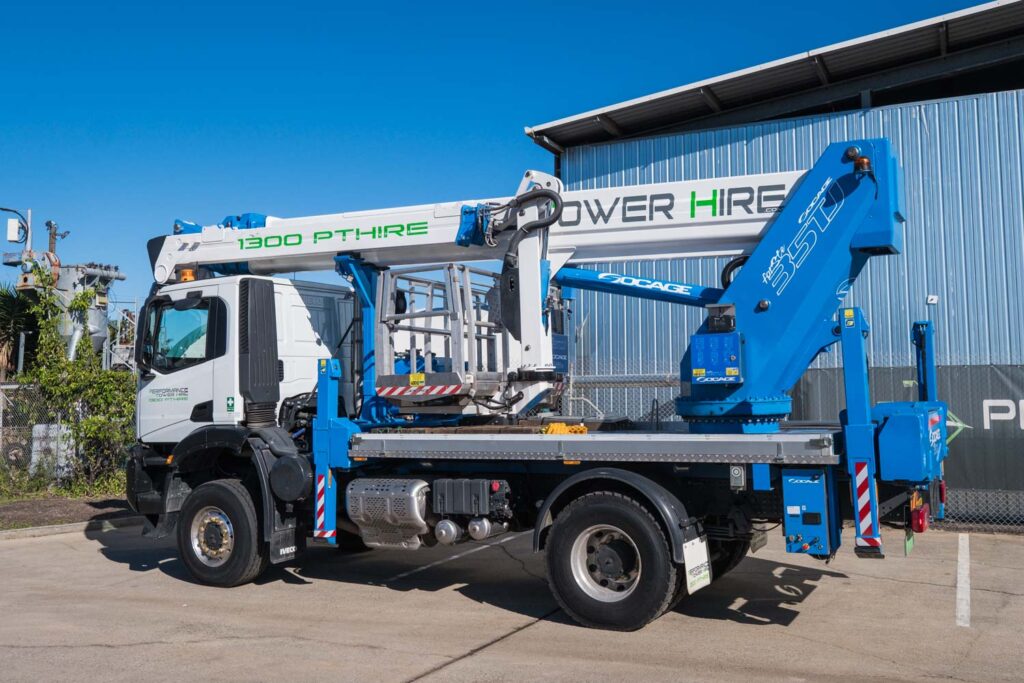
PTH301: 30m working height, 16m radius, 400kg platform capacity. A dependable mid-range machine on a Mercedes Benz 4×4 chassis, well suited to construction and commercial maintenance work that needs solid reach without going to the largest units.
20 metres working height
PTH201: 20m working height, 11m radius, 225kg platform capacity. Compact and manoeuvrable, a good fit for residential work, signage, and jobs where a smaller footprint matters as much as the height itself.
Get the Spec Right Before You Book
If you’re not sure whether your job needs a bigger cherry picker than you’ve been quoted, it’s worth having a conversation with a Performance Tower Hire team member. We will talk through the site details with you and ensure you land on the right unit the first time.
Find out more details on our cherry picker hire page, or get in touch for a free quote. If you want to chat right now, call us 1300 784 473. We’re always happy to help you get the right EWP for your job, and also decide whether wet hire or dry hire suits best.
Chat soon.
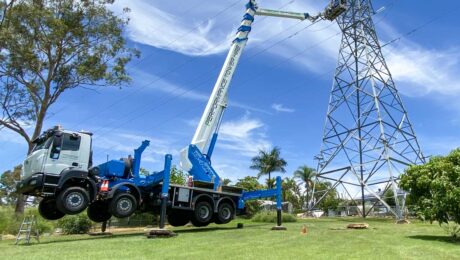
Most jobs don’t need the biggest machine on the fleet. A 20m unit handles the majority of residential work. The PTH351 at 35m covers a lot of commercial and industrial ground. On some jobs, those machines don’t have the working height to reach the work face. That’s when it’s time to turn to ‘the penthouse’.
PTH541 & PTH542 are Performance Tower Hire’s biggest truck-mounted EWPs. They are both Socage TJJ54, offering 54m of workable height, 40m maximum radius and 600kg basket capacity on an IVECO Astra 8×8 480HP truck. PTH542 also comes with a 1500kg winch attachment.
If your job demands stability at towering heights, this machine is the right call. Let’s take a look at when that would be the case.
There’s More To It Than Height
Working height is a reasonable starting point, but there are other specs to consider on a job. Horizontal reach is an important stat that also determines whether a machine can do a job.
Both PTH541 & PTH542 have a working height of 54m and a horizontal reach of 40m. That’s an important combination – if your truck has to sit 30 metres back from a job because there’s an obstacle in the way, this machine will still be able to get you there over the obstacle.
Before you decide on a machine, take into account where the truck can physically park and how far the boom needs to reach horizontally to get your team to the job. That’s as important as working height.
Jobs That Use a 54m EWP
Here are some of the Brisbane industries getting in touch with Performance Tower Hire to book PTH541 & PTH542.
High-voltage powerline and transmission infrastructure
Transmission towers and high-voltage distribution infrastructure sit well above what most EWPs can safely reach. Add the clearance distances required under the Electrical Safety Act and AS 2550 when working near energised lines, and the effective working height climbs further still.
PTH541 & PTH542’s reach envelope handles structures and access scenarios that smaller units can’t touch. Operators on this machine hold current M31A qualifications, and Performance Tower Hire can provide approved spotter services where the work requires it.
High-rise facade and building maintenance
Facade painters, sealant applicators, window cleaners, and building inspectors working on Brisbane’s taller commercial and residential buildings regularly need more than 35m. On a 12 to 15 storey structure, you need height plus the ability to position along the full face without constant truck repositioning.
The Socage TJJ54’s 700° turret rotation significantly reduces the number of moves required, which on a tight CBD site helps with efficiency.
Telecommunications
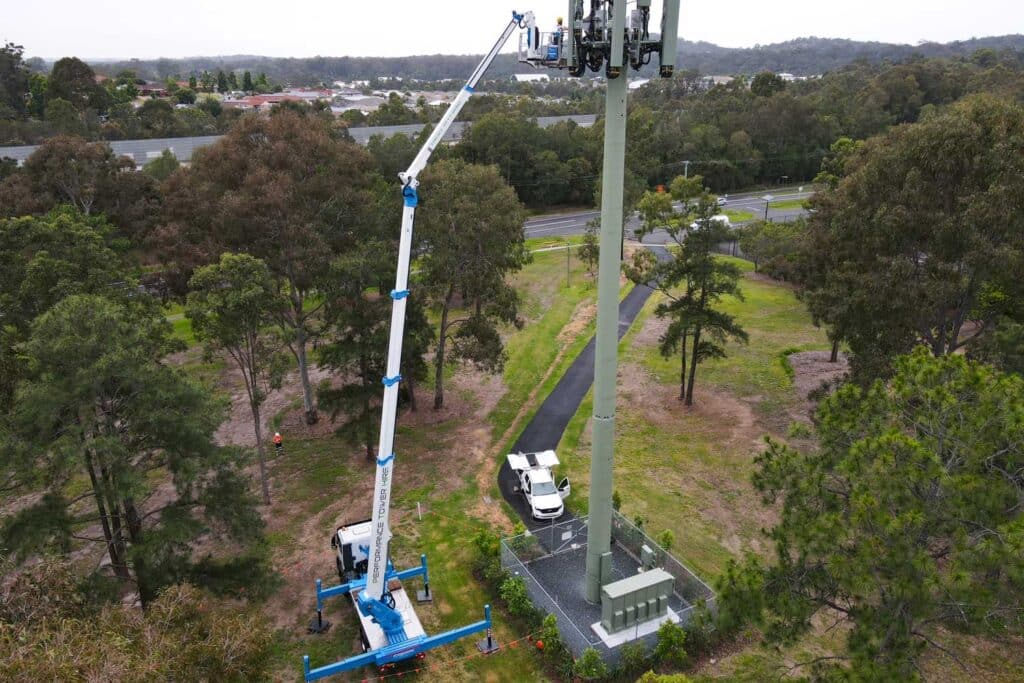
Taller telco structures, particularly in suburban and semi-rural areas where towers are designed to clear surrounding tree canopy, regularly push access requirements into the 40 to 50 metre range. The challenge is getting the boom over obstacles to reach antenna arrays or equipment mounts at the top of the structure.
PTH541 & PTH541’s double jib system and horizontal reach handle jobs like this well.
Industrial plant and stack maintenance
Refineries, processing facilities, and industrial plant often have tall structures surrounded by existing equipment, pipework, and other obstacles that make access complicated.
PTH541 & PTH542’s 600kg platform capacity means you can put a crew and their gear in the basket without making multiple trips. The platform extends hydraulically to 3,600mm, giving the team room to work properly rather than shuffling for position.
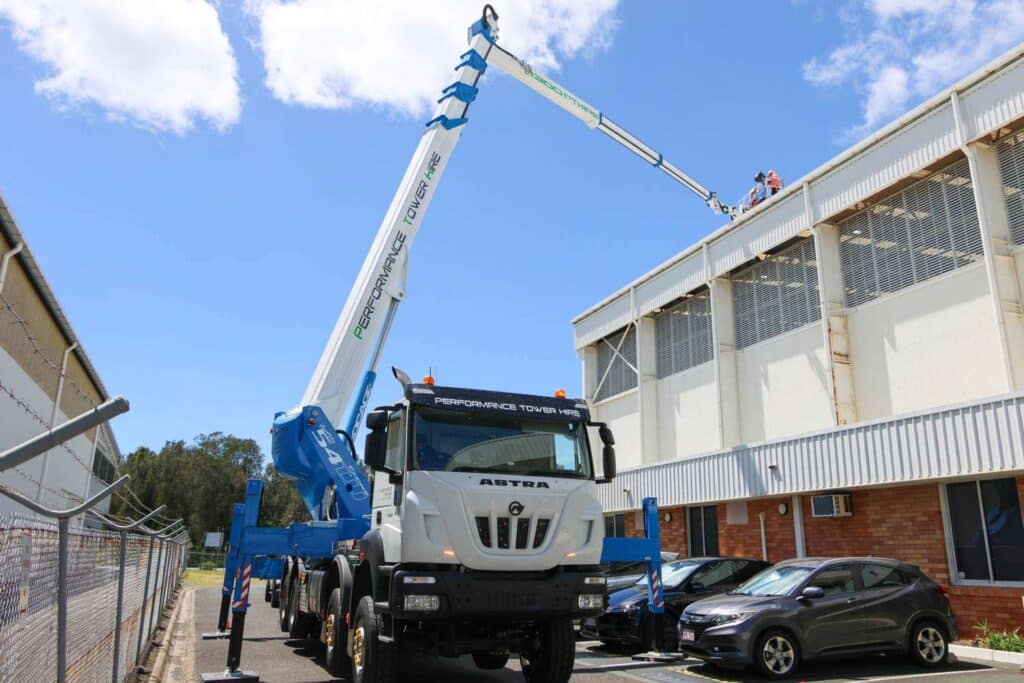
Features of the TJJ54
We nickname the Socage 54TJJ the Penthouse not just because it can tower so high in the sky. It’s also about the list of features operators have access to. These include, but aren’t limited to:
- The standard basket is 2,300 x 900mm and extends hydraulically to 3,600mm.
- Capacity is 600kg, which covers six operators plus materials.
- The platform control station runs a 7″ LCD screen showing real-time data: 2D work area, stabiliser status, limiter status.
- The operator can start and stop the motor from the basket.
- Turret rotation is 700°, allowing the boom to service a wide arc from a single truck position.
- Multi-zone stabilisation gives the setup crew flexibility on sites where full outrigger deployment isn’t possible in every direction.
Wet hire only
Both PTH541 & PTH542 are available on a wet hire basis only. That means the machine comes with a qualified and experienced Performance Tower Hire operator. No dry hire option is available. Here’s why.
At 54m, the WHS obligations around operating a boom over 11m under the Work Health and Safety Regulation 2011 (Qld) apply. The complexity of positioning and operating a machine of this size in live commercial and industrial environments also requires an experienced hand. With dry hire, you don’t get that safety buffer.
Our operators hold current M31A High Risk Work Licences and know this machine. They’ve worked it across Brisbane and SEQ on the kinds of jobs we spoke about above. Your work is in safe hands with them.
Do You Need 54m of Working Height?
If your job sits below 35m in working height and within 25 to 30m horizontally, the PTH351 will likely cover it and mobilise faster. If you’re working up to 20m in a tighter access situation, other units in our fleet would be worth looking at first,
If you’re dealing with a tall structure or a large distance between where you can park the truck and the job itself, PTH51 or PTH542 could be the answer. If you also need heavy gear at height, it can accommodate that.
Get in touch with the Performance Tower Hire team to confirm the right machine for your job. We’ll provide you with a free quote for wet hire across Brisbane and South East Queensland.
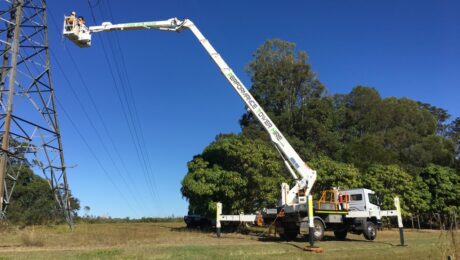
The risks of powerlines are drummed into us at a young age. The huge volumes of electrical current running through them present a significant danger to human life. For operators using a truck-mounted EWP, or any working-at-heights platform, the risk profile increases significantly.
The boom places them in areas ground-based workers don’t reach, and often that’s in close proximity to power lines. This could be on a building site, in a residential space or within a suburban setting.
If you’re a site manager or contractor and you’ve got questions about powerlines and EWP use, the below guide will answer them. If not, our Brisbane hire team is always available for advice, give us a ring on 1300 784 473.
Why Powerlines and EWPs Are a High-Risk Combination
Powerlines are visible and stationary, but they have an invisible danger zone around them. Electrical arcing can take place before an object actually touches the cable. This means an operator, or the boom or basket, can get shocked without making physical contact with the line.
Your cherry picker puts an operator well into the vicinity of powerlines. The whole point of the machine is to get up high. Whether you’re working on a suburban Brisbane treelopping job or on a commercial building site near high-voltage transmitters, you need to be aware of exclusion zones and have the right personnel on the job. Active management and observation of safety protocols before and during operations is essential.
AS 2550 and What It Means
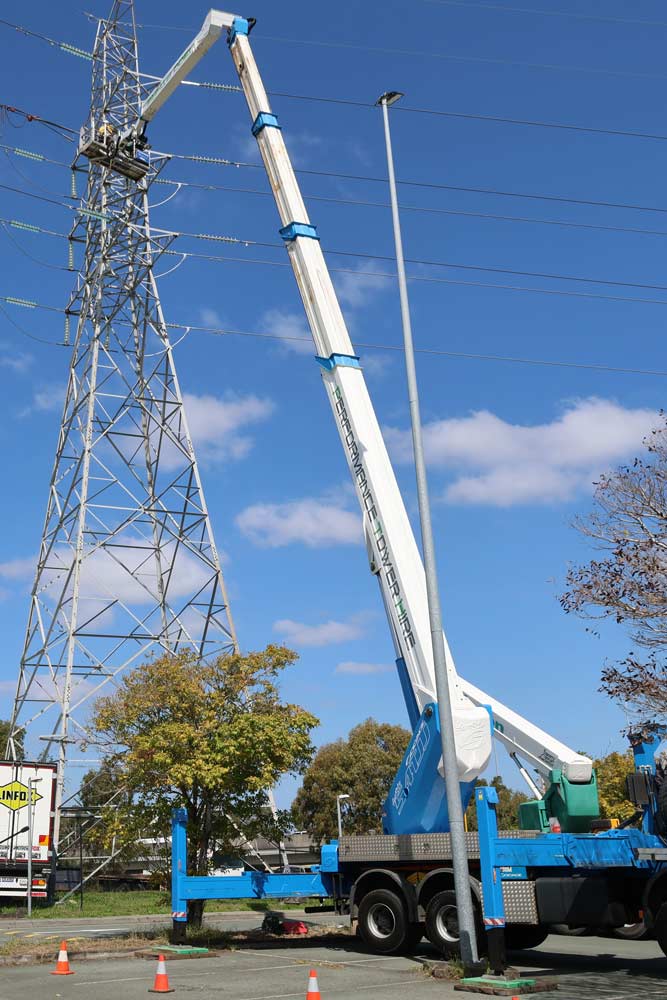
AS 2550 is the Australian standard governing the safe use of cranes and EWPs. It sets out minimum approach distances for working near powerlines, with exclusion zones that vary depending on the voltage of the line in question.
The key takeaway for site managers is:
- There are defined distances within which an EWP cannot operate without specific controls in place.
- Those distances are not one-size-fits-all – a standard street-level powerline and a high-voltage transmission line carry very different requirements.
For site-specific guidance on voltages and exclusion zones, you can speak with the Performance Tower Hire team. Our operators are all up to date with the correct safety standards.
Who Is Responsible on a Queensland Construction Site?
Under Queensland’s Work Health and Safety Regulation 2011, responsibility doesn’t sit with one party. The principal contractor, the hirer, and the operator all assume some level of responsibility.
Principal Contractor
The principal contractor has to identify and manage the hazard before work begins. That means identifying powerline locations and voltages and establishing exclusion zones as part of the site safety plan. This all needs to be communicated to the relevant parties before EWP deployment.
The EWP Hirer
The hirer is responsible for ensuring the machine and operator are appropriate for the task. If the job involves working near powerlines, the hirer needs to brief the operator on site-specific hazards before work starts. Handing over the keys and walking away doesn’t discharge that obligation.
The EWP Operator
The operator carries their own duty of care regardless of instructions from above. They are responsible for not entering exclusion zones and for raising concerns about anything that puts them or others at risk. An experienced operator who regularly works near powerlines knows where the line is, in every sense.
There’s no outsourcing of responsibility when it comes to EWPs and powerlines. All parties need to be engaged and aware of the work being undertaken.
The Wet Hire Solution
Dry hire puts a machine on your site. Wet hire puts a machine and an experienced operator on your site. When powerlines are in the picture, this is an important distinction.
It comes down to knowledge and experience – a licensed Performance Tower Hire operator who works regularly on SEQ construction sites understands exclusion zone requirements, knows how to position the machine to maximise safe working radius, and knows when to stop.
Also, all our operators are M31A qualified and we can provide approved spotter services where the job requires a second set of eyes on the ground.
If you’re a contractor and you want the confidence that EWP work in the vicinity of a powerline is being handled by someone who does this for a living, wet hire is the best choice for you. You still have the burden of compliance, but you can rest assured the competency side of things is being taken care of by Performance Tower Hire.
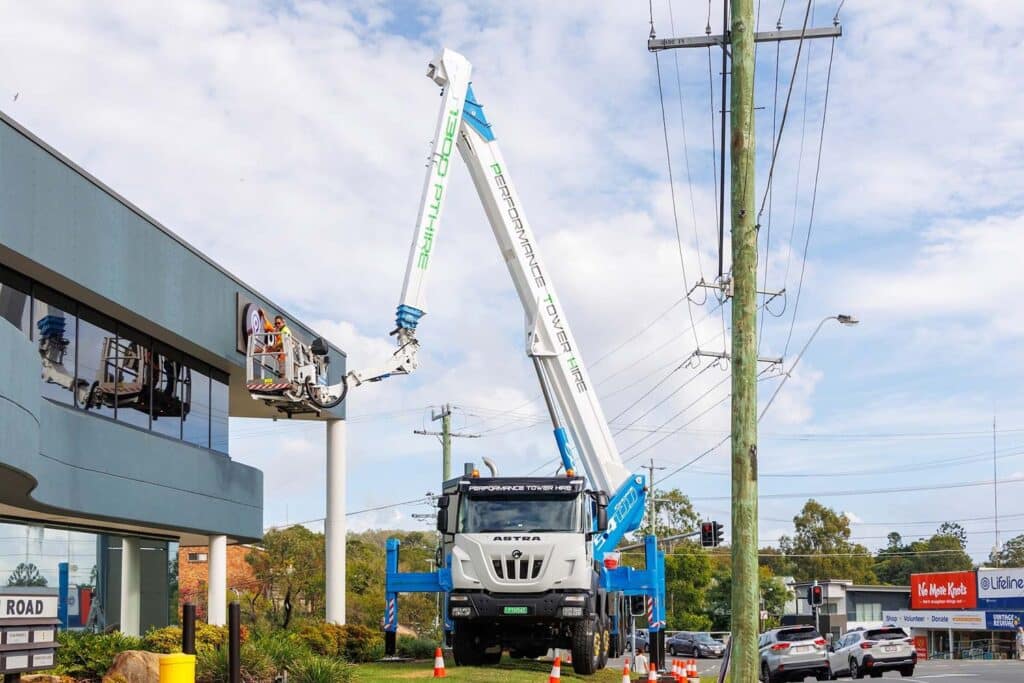
Working at Height Near Powerlines? Follow These Steps.
Before the machine arrives on site, work through these steps:
- Identify any powerlines on or next to the site. Remember those on neighbouring properties could fall within the boom’s radius.
- Establish exclusion zones in the site safety plan based on AS 2550 requirements for the relevant voltage.
- Brief the operator on powerline locations and exclusion zones before work begins.
- Confirm whether a spotter is required and have that person in position before the boom goes up.
- Have a clear stop-work protocol in place if conditions change, including unexpected line movement in wind.
These aren’t complicated steps. Safety on site comes in being consistent about implementing them.
Talk to Performance Tower Hire Before Your Next Job
If your next Brisbane or SEQ job puts an EWP anywhere near powerlines, it’s worth a conversation before you book. We can talk through which machine is best for your job and whether you should be looking at wet hire or have the internal capacity for dry hire.
Get in touch today and let’s get the conversation started. Your safety on site is our biggest priority, particularly when you’re working near powerlines. You can reach us here or on 1300 784 473.
If you’re in the construction industry, there are two legitimate solutions to working at heights – EWP hire and scaffolding. One involves scaffolding that provides a base for your team to work from, and the other is to use an elevated work platform from your local EWP hire company.
Both will get you up to height safely – the question you need to ask is which is the right choice for your job? This is something the Performance Tower Hire team gets asked a lot. Today, we’re going to give you an honest breakdown that will hopefully help you land on the right answer. You can always get in touch and chat with one of our experts if you need more information about anything related to working at heights.
A Quick Introduction to Scaffolding and EWPs
Scaffolding
You will have seen scaffolding erected around buildings or a work area undergoing repair. It’s a temporary framework of metal poles and boards built to provide stable platforms workers can climb onto and work from. Multiple trades can use it, but a licensed scaffolder needs to set it up and take it down at the end of the job.
Elevated Work Platform
An EWP (elevated work platform) is a mobile elevated platform, often called a cherry picker, travel tower or boom lift. Flexible and mobile, an EWP is quick to set up and can move around the site quickly as the job requires. You can hire an EWP with a qualified operator, or simply hire the machine itself and have a member of your team operate it (provided they have the correct licenses).
Setup Time and Site Disruption
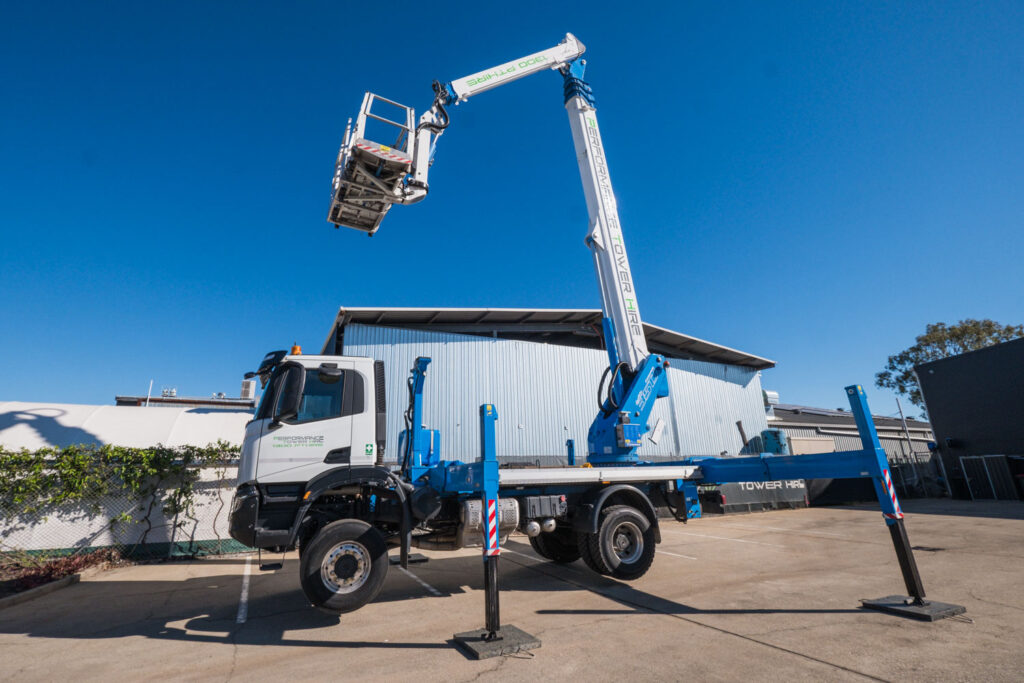
Most trade jobs tend to lean toward EWPs because they’re a more efficient option. Putting up and taking down scaffolding takes time and requires a licensed tradie. Sections of a worksite go into lockdown while this is being completed – if you’re working on a tight Brisbane block, this could mean blocked driveways, angry neighbours and restricted access for other trades.
With an EWP, setup is fast and work can start in almost no time at all. The machine can be moved if it is blocking the way, and dismantling at the end of the day is easy and fast. Site disruption is minimal and coordination with other trades and workers is seamless.
Cost Comparison Between Scaffolding and EWPs
Costs are going to be dependent on a number of variables, so its tricky to do an exact cost comparison. It’s safe to say this, though:
For long-duration projects where a fixed platform will be used by multiple trades across multiple weeks, scaffolding is likely to be more cost-effective.
For short-duration jobs performed by a single trade, hiring an EWP is likely the cheaper option. If it’s a one or two-day job with height access required at a number of spots, you can’t go wrong with an elevated work platform.
EWPs Give You Access and Flexibility
An EWP can reposition in minutes, giving it a clear advantage if mobility is required on the job. If you’re moving across multiple elevations or between different job sites, your elevated work platform will cover ground that scaffolding can’t.
At Performance Tower Hire, we run a fleet that ranges from compact units through to the PTH541 which has a working height of 54 metres. We’ll be able to match the right machine to your job. If access is tight or ground conditions are difficult, we have a Palazzani XTJ43 spider lift for hire that can overcome these.
When Scaffolding Is the Better Call
There are jobs where scaffolding is a better fit than an EWP. No point trying to push a square peg into a round hole; if scaffolding is the best option, that’s the one to go for.
If the job is running for several weeks and involves multiple trades needing access at the same time, scaffolding is the right choice. An example would be a big residential renovation where painters, electricians, and plumbers work on the exterior over an extended period. A fixed platform they can all use will be better suited than an EWP that would need to be managed around different trade schedules.
Where the work is over a large and continuous surface, like a wide panel of brickwork or rendering, scaffolding will be an easier base to work from. Also, if a large number of workers need access to the job, an EWP won’t be practical.
Queensland Safety and Compliance
Under Queensland’s WHS Regulation 2011, both scaffolding and EWP hire carry specific obligations for the persons conducting the business, the principal contractor and the individual operators.
If your EWP is over 11 metres in height, you’ll need a High Risk Work licence (TLILIC0005) to operate it. All of our EWPs for hire at Performance Tower Hire are above that length, so if you are dry hiring a machine for us you’ll need this certification.
If you’re opting for wet hire, you’ll get an experienced operator with all the right qualifications, including M31A which allows them to operate near overhead powerlines. Our machines are also all regularly serviced above and beyond industry requirements. Compliance is covered before the machine leaves our depot in Geebung.
For scaffolding, a licensed scaffolder is required for erection and dismantling. That’s a separate trade engagement to manage and coordinate.
Which One Is Right for Your Job?
Let’s break down all of the above into a quick guide:
- One to three-day job, single trade: EWP hire.
- Multiple positions or elevations around a structure: EWP hire.
- Tight access or difficult ground conditions: EWP hire, potentially our spider lift.
- Multi-week project, multiple trades using the same platform: Scaffolding worth considering.
- Large continuous working surface needed across a wide facade: Scaffolding worth considering.
- Urgent or after-hours callout: EWP hire. We’re available 24/7 at Performance Tower Hire.
Talk to the Team at Performance Tower Hire
If you’re weighing up the working at height options for a Brisbane or South East Queensland job, we’re happy to talk it through.
Our team will give you a straight answer on whether an EWP suits your job, and which machine from our fleet is the right fit.
Get in touch with our team here or call us on 1300 784 473 for a free quote or to ask any questions about the choice between EWP hire and scaffolding.
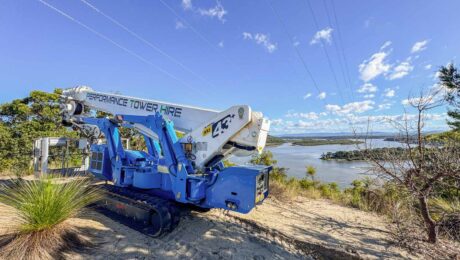
Not every job suits a truck-mounted elevated work platform. Tight access, soft ground, hectic slopes – you get a lot of that in Brisbane. Rather than ditch the job altogether, we have another option for you at Performance Tower Hire: spider lift hire with the Palazzani XTJ43 spider lift.
This advanced EWP has been a very popular addition to our EWP hire fleet, used by everybody from painters to arborists and construction workers. Today, we’re going to tell you everything you need to know about this spider lift and how to hire it in Brisbane.
What Is a Spider Lift?
Spider lifts are a category of elevated work platforms, named for the spider-like resemblance of their stabilising outriggers. They run on tracked crawlers that allows them to take on access and ground conditions that larger and less mobile truck-mounted EWPs can’t.
Often with working at heights the job site can be confined and tricky to access. You might not be able to get a truck in there, or the ground conditions may not support the weight of the truck EWP. A spider lift like the XTJ43 sidesteps most of that. It’s smaller, lighter and more maneuverable.
This model’s tracks retract to 1.35 metres to get through tight areas, and then spread out again to provide stability. Once you’ve got the EWP into position, four independent outriggers provide it with a stable base. They move separately to each other, allowing for setup on slopes or around obstacles.
The XTJ43 is designed to exert low ground pressure, with the tracks spreading its weight across a large surface area. This is handy for work where you don’t want to stress the surface beneath. Pavers, heritage flooring, manicured lawns can all be kept safe.
The Palazzani (PTH431) XTJ43 Specs
The Palazzani XTJ43 (fleet unit PTH431 at Performance Tower Hire) is manufactured in Italy. It’s a high-quality EWP with well-thought-out specs that make it suitable for a wide range of jobs. Let’s look at those specs now.
- 43m working height, 18m maximum radius. For a machine that can get through a tight side gate opening, that’s some serious reach. Tree canopies, telco work, high rooflines – all are accessible with this spider lift.
- 330kg basket capacity. You can get three crew and their tools in there. That should cover the majority of trade scenarios.
- 660° turntable rotation with no tailswing. The boom rotates fully without the tail sweeping out behind it. Extremely helpful in a confined courtyard or tight indoor space.
- 38% slope capability. Brisbane’s terrain isn’t flat. The XTJ43 handles gradients that would require ground preparation with a truck-mounted EWP.
- Basket-to-ground intercom. No shouting or hand signals – crew in the basket and those on the ground stay in clear contact with no hand signals required.
When a Spider Lift Is the Right Call
Those are some neat stats we’ve just gone over, but even so, spider lifts aren’t always the right call. For many working at heights jobs, a truck-mounted EWP is the answer. If you have clear road access, solid ground, and a truck can get in close, check out our range of truck-mounted EWPs here and you’ll find the right one for your job. Just hit us up on 1300 784 473 if you need guidance.
There are definitely those jobs, however, where a spider lift like the Palazzani XTJ43 is the right call. They will look like this:
- Narrow access that a track won’t fit through, like a laneway, side gate or small garden.
- Weight-sensitive surfaces like Pavers, turf or heritage floors.
- Sites with underground services or voids.
- Steep slopes and uneven terrain.
- Jobs with multiple obstacles that the outriggers will need to work around, such as a forested area.
If you’re unsure which machine suits your job, give us a buzz and we’ll work through it with you.
Industries That Hire Spider Lifts in SEQ
We cater to a number of industries with this spider lift for hire in Brisbane. Here are a few of the more common ones:
Arborists: Residential tree work often means narrow side access and gardens where ground damage isn’t acceptable. The XTJ43 fits through standard gates and keeps its footprint small.
Painters and facade restorers: Heritage buildings and sensitive surrounds call for a machine that won’t tear up the approach or leave tyre marks across original surfaces.
Electrical and telco contractors: Confined plant rooms, indoor switchrooms, and high industrial spaces all suit the XTJ43’s electric mode and compact setup.
Facility managers and events: Warehouses, convention centres, and exhibition venues need height access without the logistics of bringing a truck inside. The spider lift handles it cleanly.
Construction and fitout: Sloped sites, confined urban footprints, and high interior work can all be tackled by this EWP. .
Enquire About Spider Lift Hire Now in Brisbane
We offer the Palazzani XTJ43 for wet hire from Performance Tower Hire. If you’ve got a qualified and experienced operator on your crew, you may want to opt for dry hire. If not, let one of our skilled operators manage the control of the spider lift for the job. They’ll get the work done efficiently and safely.
Our depot is in Geebung, and our machines are available all across South East Queensland. If you chat to our team and decide a spider lift isn’t the right call, then we have a range of truck-mounted EWPs that might be more suitable for what you need.
Let’s talk about your next working at heights job, and whether you need truck-mounted or spider lift hire. Get in touch here or call us on 1300 784 473.
Dry hire is a good option if you have a licensed and experienced operator on your team. You’re saving on costs because you’re not paying for a hired operator – but you need to be on top of the responsibilities it involves. Particularly when it comes to safety.
With wet hire, there’s a shared approach to responsibility; when you dry hire an EWP, it falls squarely on your shoulders. You need to understand your safety obligations before the machine gets to site.
The part that catches some hirers off guard is the shift in responsibility. When there’s no operator on site, the safety obligations that would otherwise be shared don’t disappear. They land with you. Understanding exactly what that means before the machine arrives helps the job go smoothly and keeps you on the right side of compliance regulations.
No Hired EWP Operator on Site
When you engage in a wet hire arrangement with Performance Tower Hire, our operator handles a significant portion of the on-site safety work. That includes pre-start inspections, harness checks, spotter coordination and real-time risk assessment as the job progresses. There’s a lot of expertise built into the hire.
With dry hire, those responsibilities transfer to you. You’re legally responsible for managing the risks associated with working at heights – it’s part of the Queensland Work Health and Safety Act. We provide you with the compliant machine, you take care of PPE (Personal Protective Equipment), a licensed operator, pre-start checks, spotters and any other safety protocols.
If you’re an experienced operator you’ve no doubt got this all under control. It’s important we get this information out there though, because the WHS framework doesn’t leave much room for assumptions.
What Performance Tower Hire Takes Care Of
When one of our elevated work platforms leaves the yard on a dry hire, it goes out compliance-ready. Every unit in the fleet is maintained to AS 2550 standards. It carries current service records and goes through pre-delivery checks before it reaches your site. You can rest assured that when it comes to safety, the EWP you’re hiring ticks all the boxes. We have factory-trained technicians on-site keeping our machines in perfect working order. They’re not just safe, they’re reliable too.
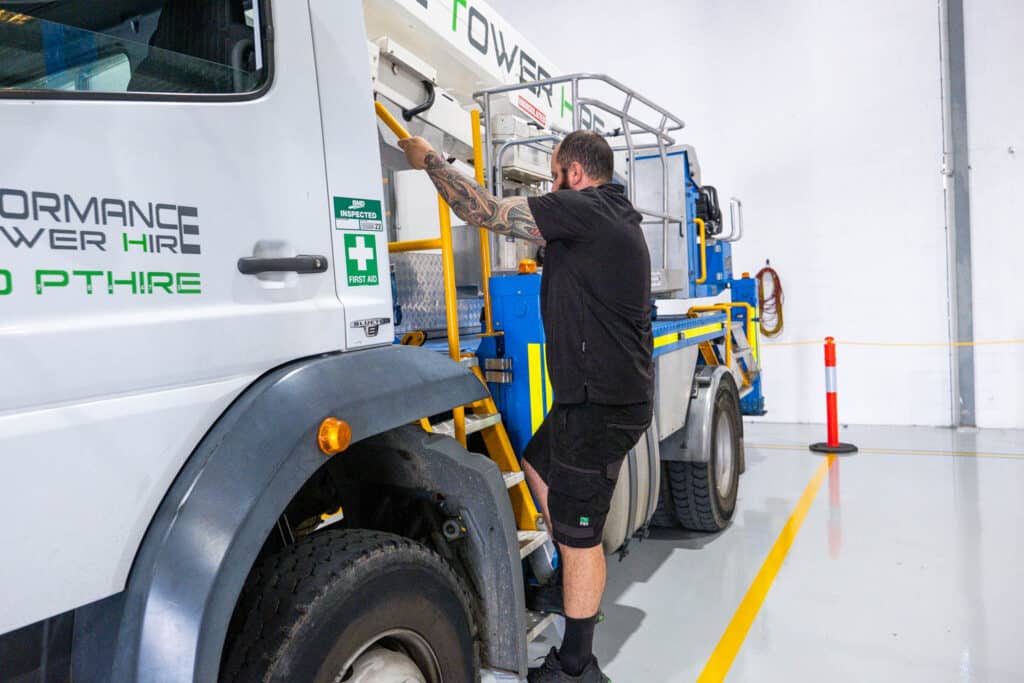
What the Hirer Takes Care Of
Let’s take a close look at your safety responsibilities when you dry hire an EWP.
PPE obligations
PPE for EWP work is non-negotiable under Queensland WHS regulations. It’s more than throwing on a hard hat – let’s look at what every EWP operator should have sorted:
Full-body harness and lanyard
A full-body harness is required for all EWP operations. This can’t be a chest harness or a waist belt. Inspect it before each use, fit it to the operator correctly and ensure it’s firmly attached to the EWP anchor point.
Helmet
A safety helmet certified to AS/NZS 1801:2024 must be worn on site. Regular inspections and replacements after any serious knocks are also non-negotiables. Helmets are important all the time, especially when working with overhead hazards like tree branches.
Hi-vis clothing
Hi-vis compliant with AS/NZS 4602.1 is required for most EWP work sites. Class D/N is the right call for the majority of jobs as it covers both daylight and low-light conditions. It’s the standard expectation across construction, civil, and outdoor maintenance work in Queensland.
Safety footwear
The operator must wear steel-capped boots certified to AS/NZS 2210. Slip resistance is a critical feature too – the platform can get s;ippery if there’s any wet around.
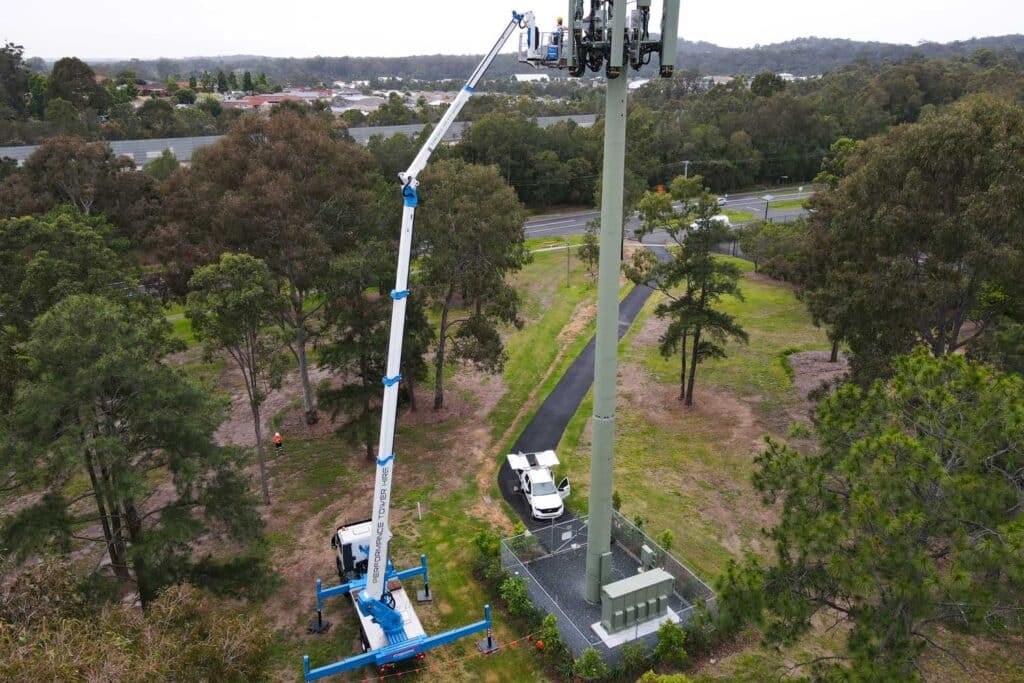
Truck-mounted EWP Best Practice for Safety
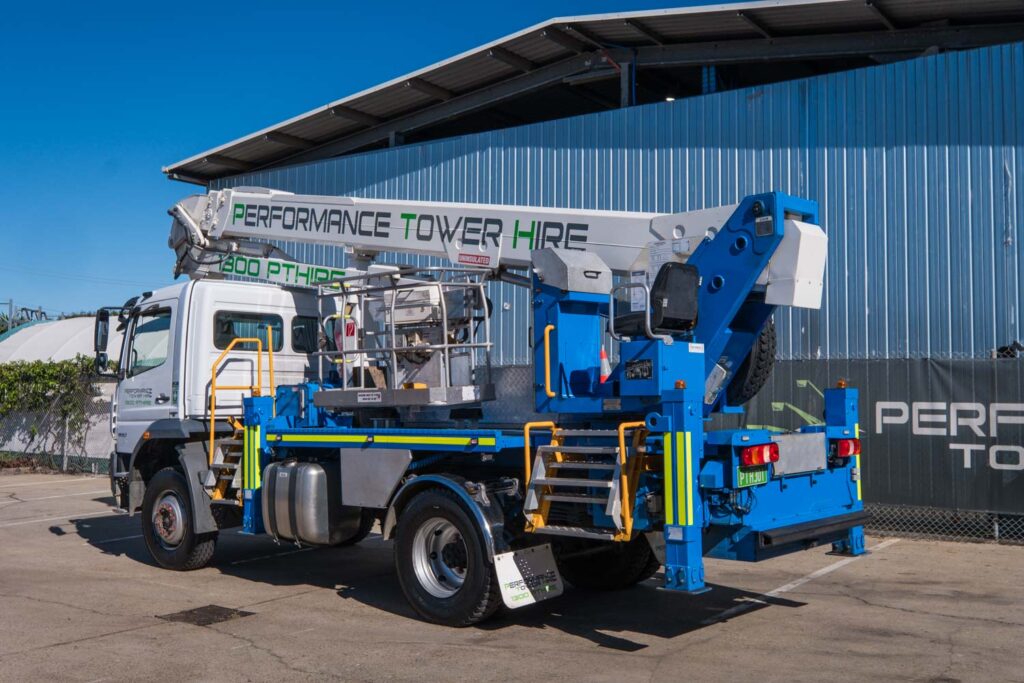
Performance Tower Hire operates truck-mounted EWPs from 16m up to 54m working height. These are serious heights, and serious safety considerations need to be taken. Your properly sized lanyard and correctly positioned anchor point are extremely important in the event of a fall or slip.
Our machines have designated anchor points built to AS 2550 requirements. Before you start on the job, ensure your operator knows where the anchor point is, that the lanyard length is correct and fitment and connection are all done properly. We can’t stress this enough when you’re operating a truck-mounted EWP.
EWP Licencing
Every machine in the PTH fleet has a boom length over 11 metres, which means the WP High Risk Work Licence is required without exception.
Confirm your licence is current before the machine arrives. Too many businesses leave it to the last minute before realising they don’t have a correctly licensed operator.
Pre-start Inspection
Before anyone goes up, a pre-start inspection is required. Here’s what to check:
- Controls are working
- The platform is in decent condition,
- Where the harness anchor points are and if they are secure
- The ground conditions around the outrigger footprint.
A documented risk assessment of the site should also be completed. This needs to cover overhead hazards, ground stability, exclusion zones, and emergency procedures.
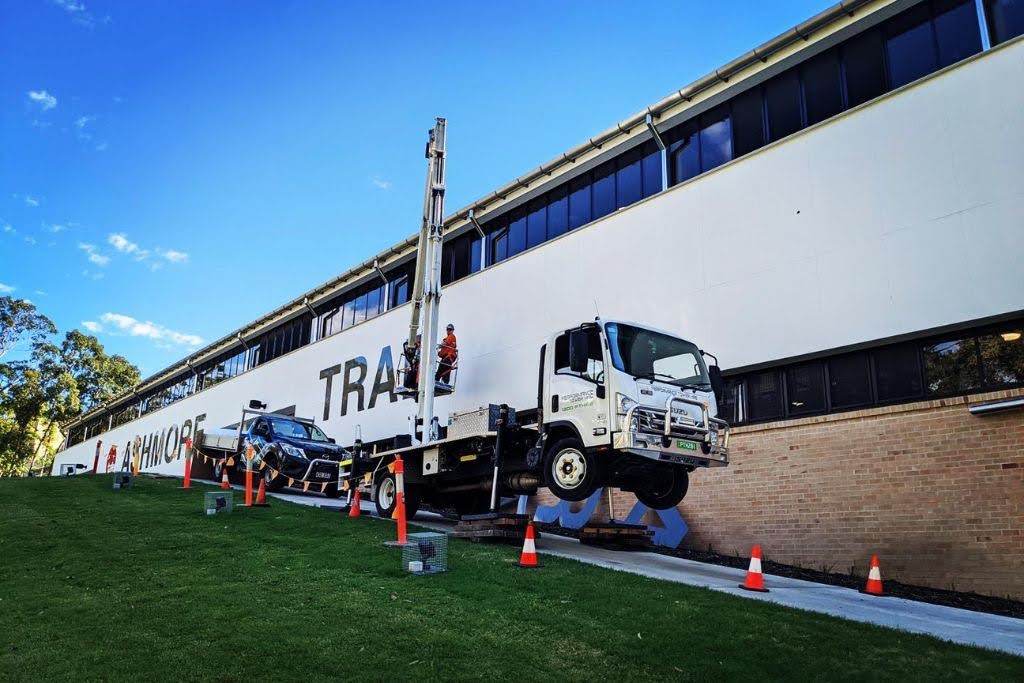
When to turn to wet hire
No matter how experienced your team is there are still situations where wet hire is more suitable. In that kind of situation, having a licensed operator on site removes risk and pressure, while ensuring the job gets completed to a very high standard.
Examples could be jobs with very complex site conditions, or work on a site with tight compliance restrictions. Wet hire could simply be the more efficient and safer method of getting the job done.
Talk to Performance Tower Hire before you book
Not sure whether dry or wet hire is the right fit for your next job? Give us a buzz on 1300 784 473 or get in touch here. We’re happy to talk through what the job needs before you commit to anything. It’s important you get the right machine and the right hiring arrangement for your working at heights job, and we’re here to guide you to that.
If you know that your next job will be working at heights, and you want to hire the right machine, this EWP hire guide is for you. You’ve visited the site, you know the height you’re going to be working at and you know that a truck-mounted EWP is what you need.
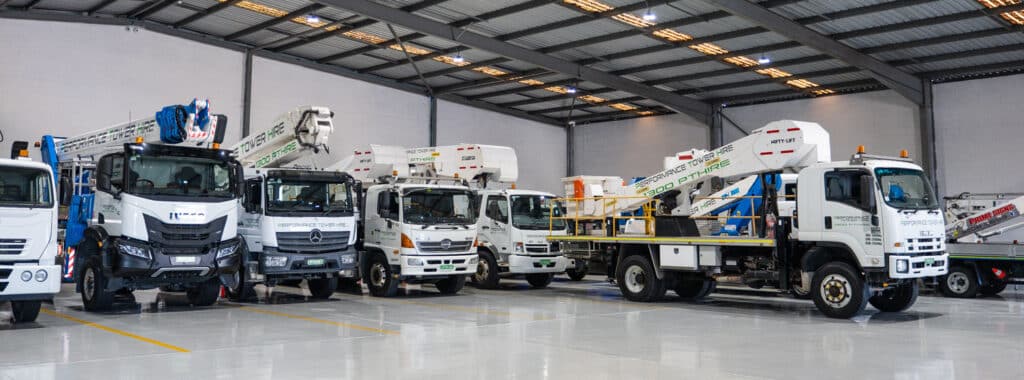
PTH operates a specialist fleet of EWPs from 16m to 54m working height, available for wet hire and dry hire across Brisbane and South East Queensland, 24 hours a day, seven days a week. While most EWP hire companies will give you a list of models and let you choose one, it’s important to us that we guide you to the perfect machine for your job.
This guide outlines the four variables that determine machine selection:
- working height
- horizontal outreach
- ground conditions
- site access
It then maps them to the specific units in the PTH fleet, so you can have an idea of what we can offer you. Our team is here to answer any questions you have, so please hit us up if you need to.
Working Height and the Buffer Required
Platform Height vs Working Height
The first number you think about is the height of the job and what EWP will reach it. That makes sense – let’s take a moment to differentiate between working height and platform height:
Platform height is the distance from the platform to the ground. Working height adds a couple of metres for the operator’s reach from the platform. This is pretty handy because the working height gives you a baked-in buffer of a couple of metres. More on why a buffer is important…
The Height Buffer
Having a machine that can comfortably reach and go even higher than your elevated job is important for peace of mind and safety. Businesses looking to hire an EWP often underestimate the buffer. This can be problematic when you are greeted by conditions like these on site:
- Uneven or sloping ground
- When you load the EWP the outriggers could settle down which drops the chassis
- Human error led to the job height being wrong by a couple of metres.
If your EWP can’t reach the job then you’re going to lose out on considerable work time. If it only just reaches the job, you’re compromising the safety of your crew. Applying a height buffer when you book your EWP solves those problems.
What the PTH fleet covers
The PTH fleet spans from the PTH201 Socage T320 at 20m through to the PTH541 at 54m working height.
For the bulk of commercial painting, facade work, signage installation and other jobs across Brisbane’s suburban areas, the 28m to 35m range covers it. The PTH281 Cela DT 28 and the PTH351 Socage 35TJ are both popular options that sit in that range. Between them, they handle a large share of SEQ commercial work and are popular requests from Performance Tower Hire customers.
Horizontal Outreach
This specification can cause a big problem if it hasn’t been taken into account. If your job is located any distance away from where the base of the EWP sits, then outreach is going to be an important metric to get right.
You need to determine where the truck will be relative to the job. If you’re in a tight suburban setting, the truck will be on the street kerb. You might be working on a building facade that’s ten metres away – the machine you hire needs the horizontal outreach to cover that gap.
Jobs where Outreach is Critical
Let’s take a look at the kinds of jobs where outreach is going to play a big part in the EWP you hire:
- Tree loppers who need to position the truck well clear of the branch drop zone
- Electrical and telco contractors who need to reach over existing infrastructure
- Painters working on buildings sitting back far from the street
- Signage crews working above canopies or awnings the truck can’t go under so they need to reach over.
In these examples, the horizontal reach will be a crucial EWP feature to look at.
PTH351 and PTH541: Our Outreach Leaders
The PTH351 Socage 35TJ delivers 24m of horizontal outreach on a 4×4 chassis. You can read more about what this looks like on job sites in this Socage 35TJ reach article. This reach is one of the reasons this is one of our most booked machines at Performance Tower Hire.
Our largest machine, the PTH541, pairs 54m of working height with 39m of side reach. That’s next-level range, putting it into a different category from the majority of EWPs for hire in Brisbane.
Ground and Terrain Conditions
The questions to ask before hiring article flags site ground conditions as a key consideration.
There’s a lot of variation in the SEQ terrain, even within a single work site. Brisbane suburban streets in areas like Paddington can be very sloped, while acreages out in Logan or Greenbank can be very rough or softened by heavy rainfalls.
When you’re dealing with rugged terrain, the chassis of your EWP becomes important.
4×4 Chassis Units for Tough Terrain
The PTH301 ACM300 runs on a Mercedes Benz 4×4 chassis and reaches 30m working height. It is consistently booked for energy and telcowork across SEQ because its drivetrain handles site conditions that would stop a standard 4×2.
The PTH351 Socage 35TJ adds off-road capability to its substantial outreach figures, running on an Iveco T-Way 4×4 chassis.
A Serious EWP…
At the heavy end of the fleet, the PTH541 is built on an IVECO Astra 8×8 with 450HP. For major infrastructure work, powerline corridors, and large-scale construction sites where ground conditions are variable and loads are significant, the 8×8 chassis can be pivotal to your hiring decision.
Site Access
Site access determines which machine is going to be able to access your working at heights job. This variable can cause last-minute problems on hire jobs that are avoidable with a bit of upfront checking.
Before you book, confirm the following for your site:
- Gate width and overhead clearance on the approach route
- Turning circle once the truck is on site
- Underground services and any load limits
- Overhead obstructions such as powerlines and tree canopy
The common EWP site access issues article covers the full list of what to check and why each one matters.
PTH281: Tight-Access Specialist
The PTH281 Cela DT 28 is purpose-built for exactly the kind of restricted access that stops other machines. Mounted on an Isuzu 4×2, it reaches 28m working height and can elevate up to three persons. Its outrigger spread is 3.8m x 3.8m, which is a manageable footprint for narrow roadside positions, suburban driveways, and compact worksites.
The full Cela DT 28 spotlight covers its specifications and typical applications in detail.
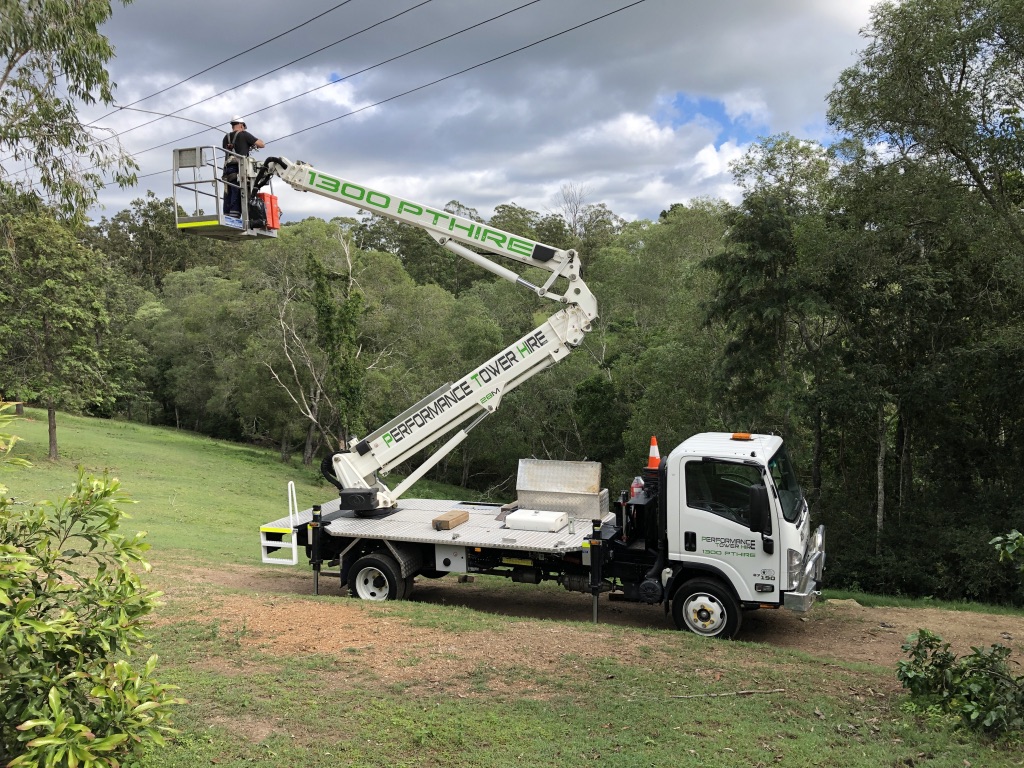
PTH391: Spider Lift Option
For sites where a truck-mounted unit cannot enter at all, the PTH391 Palazzani TSJ39 spider lift comes into its own. It runs on rubber tracks, carries a minimal ground pressure footprint, and can be transported separately and then walked into tight spaces.
Gated courtyards, load-sensitive flooring and confined urban sites – the spider lift can handle them. It’s 39m of working height make it a genuine solution for when you need high reach but have limited access.
Wet Hire or Dry Hire
Once you know which machine fits the job, the hire arrangement often follows naturally. The two decisions are linked.
If you are taking a smaller unit like the PTH201 and your operator holds a current WP High Risk Work Licence (issued through WorkSafe Queensland), dry hire works. It’s a clean, efficient arrangement for contractors with licensed operators on the books and regular ongoing work.
Please note that all Performance Tower Hire machines have a boom over 11m, so the WP licence is required for the entire fleet on dry hire without exception.
As machine size and complexity increase, the case for wet hire strengthens. The PTH541 is a 54m, 8×8 machine with a 600kg basket capacity. Most hirers do not have an operator with the experience and current certification to run it efficiently and safely. Wet hire on a machine at this end of the fleet is wise for compliance and practicality reasons.
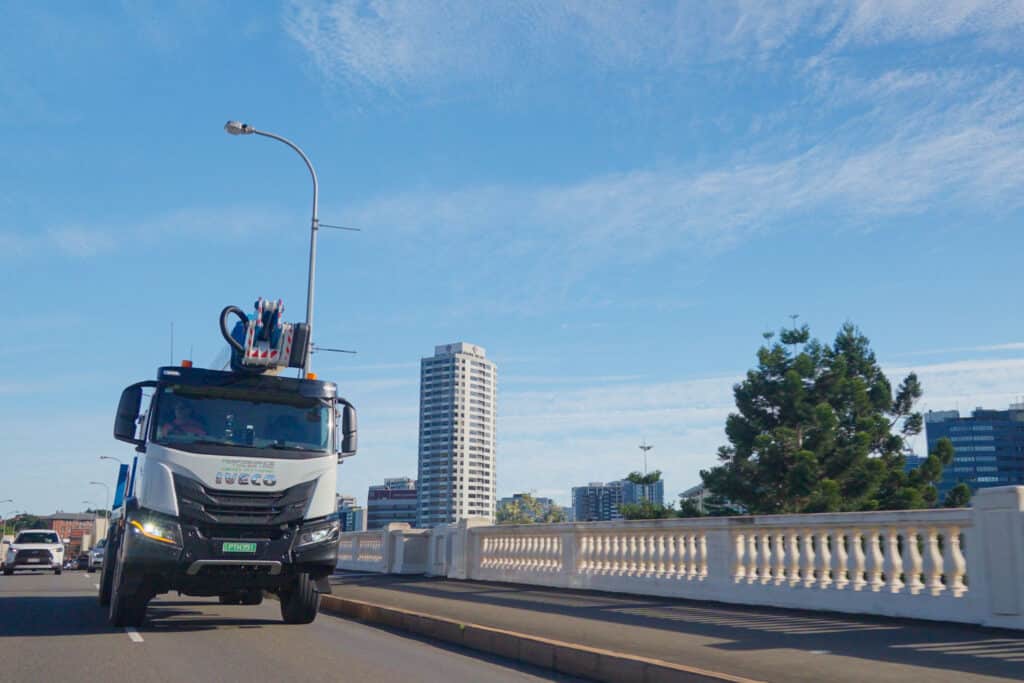
The M31A Qualification
The M31A qualification is for personnel working around high-voltage energy installations. All PTH operators are M31A-qualified and can provide approved spotter services where powerlines are a hazard on site.
This qualification is often the decider in wet hire arrangements, particularly for arborists working adjacent to powerline infrastructure or electrical contractors on distribution network jobs.
The full breakdown of wet and dry hire arrangements, including cost factors and when each one makes sense, is in the wet hire vs dry hire guide. The services overview covers how PTH structures both options.
PTH Fleet by Job Type
Every job is different and machine selection always comes down to the specifics. That said, most jobs fall into recognisable patterns. Use this as a starting point, then confirm with the Performance Tower Hire team at the quote stage.
Tight suburban access, tree lopping or painting, up to 28m: PTH281 Cela DT 28. Compact footprint, 3-person basket, suited to narrow residential and commercial sites.
Mixed terrain, energy, telco or arboricultural work to 30m: PTH301 ACM300. 4×4 Mercedes Benz chassis, strong working envelope, consistently booked for powerline-adjacent and rural SEQ jobs.
Multi-storey facade, signage, or arboricultural work where outreach is the priority: PTH351 Socage 35TJ. 35m working height, 29m horizontal outreach on a 4×4 chassis.
Confined or gated sites, load-sensitive ground, tracked access required: 43m PTH431 Palazzani XTJ43 Spider lift on rubber tracks
Major infrastructure, extreme height, significant outreach, or where the site demands serious machinery: PTH541. 54m working height, 39m side reach, 8×8 chassis.
Full specifications for all units are on the our trucks page.
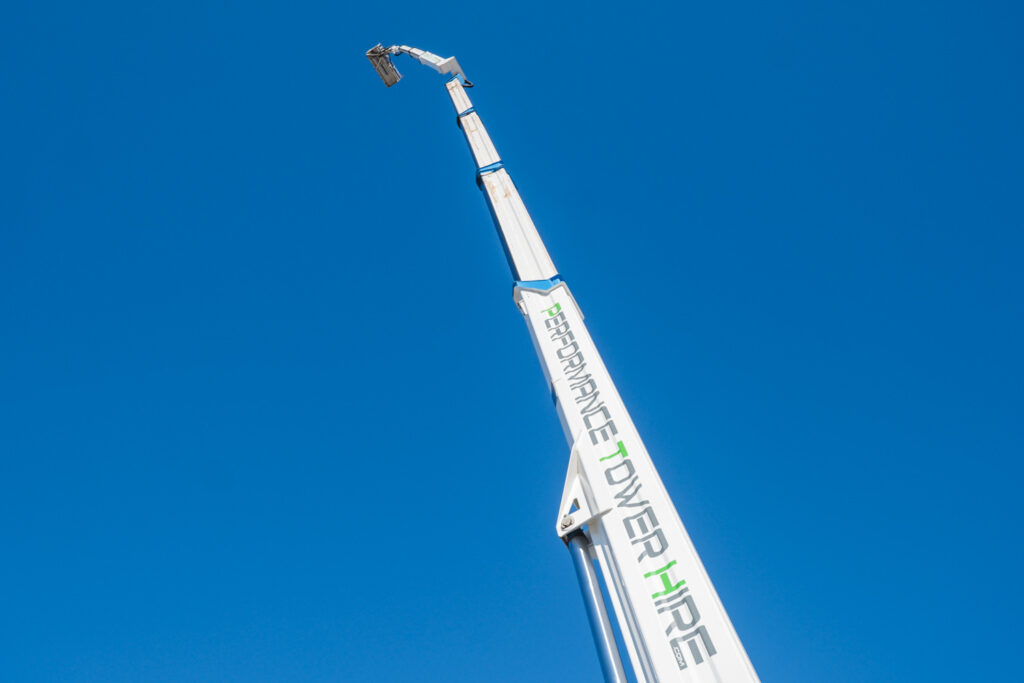
Licensing and Compliance
What Queensland law requires
All machines in the PTH fleet have a boom over 11m. Under Queensland’s Work Health and Safety legislation, any operator running a boom-type EWP with a boom over 11m must hold a current WP High Risk Work Licence. That licence is obtained by completing a unit of competency and applying through WorkSafe Queensland.
If your operator does not hold that licence, dry hire is not an option. That’s when our team can help out with wet hire. Performance Tower Hire operators are fully licensed, M31A-qualified, and familiar with every unit in the fleet.
Performance Tower Hire Fleet Maintenance
All PTH machines are serviced and log-booked in accordance with AS 2550, the Australian Standard governing the safe use and inspection of elevating work platforms. Safe Work Australia’s EWP guidance sets out the broader WHS framework that applies to working at heights in Queensland. Both are worth understanding before the machine arrives on site.
We prioritise maintenance and oversight on our machines – it’s important to us that when you hire an EWP, it doesn’t let you down on the job. You can be assured of regularly maintained machines that you can put your full trust in.
Questions About the EWP Hire Guide?
We’re here for you. Sometimes the job does not fit neatly into a category, and that is exactly what the conversation at the quote stage is for.
Our team has been matching machines to jobs across Brisbane and SEQ since 2015. Describe the job (height needed, site conditions, access constraints, timeline) and we will tell you which unit fits.
We’re based in Geebung in North Brisbane, with companies from all across SEQ using our EWP wet and dry hire services. We’d love to help you out, so give us a buzz on 1300 784 473 or get a quote here. Chat soon!
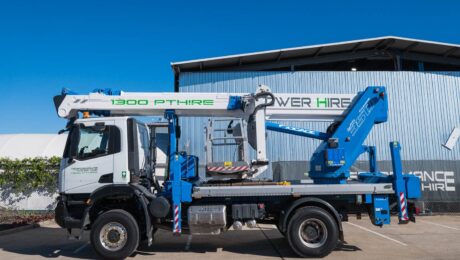
Working height numbers can feel a bit abstract at times. It’s hard to visualise a cherry picker basket soaring 35 metres in the air, and relating that to the height of jobs it allows the operator to work on.
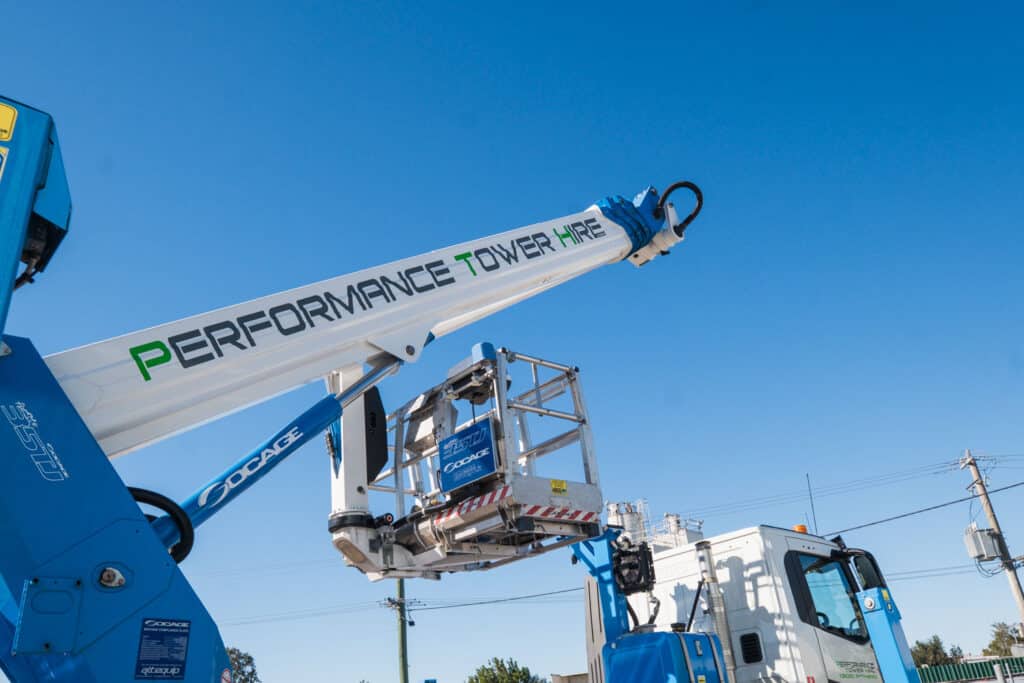
Today we want to look at one of our most popular machines, the Socage 35TJ, known at Performance Tower Hire as Truck PTH351. It’s a beast of a machine with an impressive spec sheet, which we’re going to put into real-life terms for you.
You’re going to learn exactly what this machine can do, and why certain industries target it for their EWP hire before they consider any other machine.
First, let’s take a look at the spec sheet of the Socage 35TJ.
Socage 35TJ Specifications
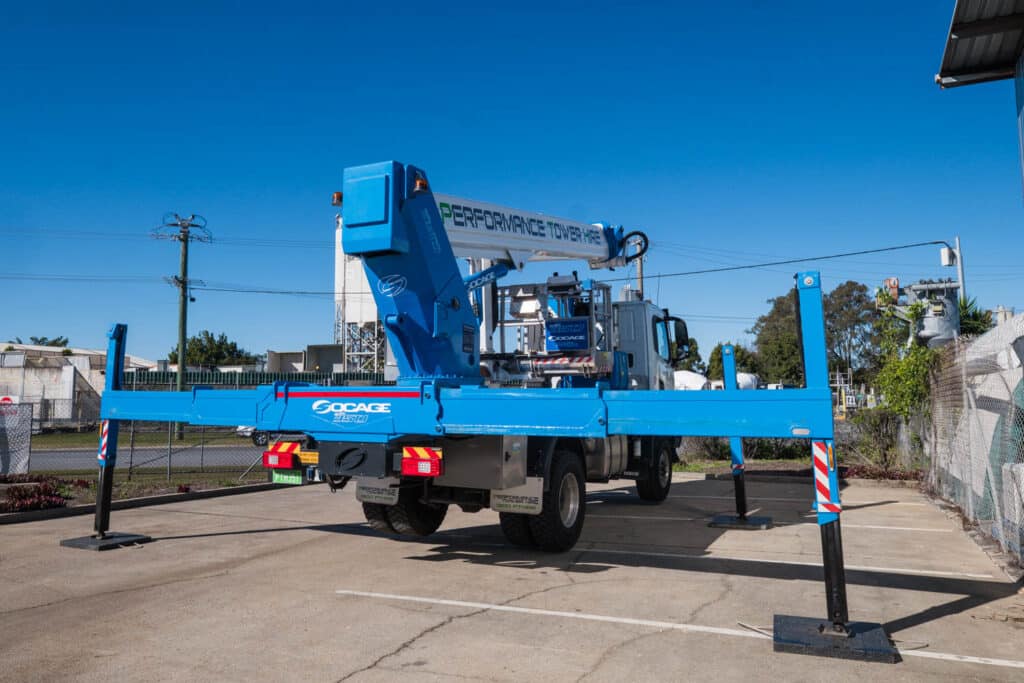
The Socage 35TJ is a truck-mounted elevated work platform (EWP) built on an Iveco T-Way 4×4 chassis. This is a go-anywhere platform that is comfortable in bush settings or on urban streets. Customers love it’s mobility and its expansive reach.
Here’s the full spec breakdown:
- Working height: 35m
- Maximum radius: 27m (23m at full 400kg platform load)
- Platform capacity: 400kg
- Platform size: 3.6m x 0.9m x 1.1m
- Platform rotation: 360 degrees
- Turntable rotation: 700 degrees
- Outrigger spread: 5.2m x 4.5m
- Overall vehicle length: 8.6m
- Drive type: 4×4
- Country of origin: Italy
A standout feature is the large platform size and 400kg weight capacity. You can get a full crew into the air with that platform – and many hands make light work. Before you know it, you’re onto the next job.
Socage 35TJ Working Height: Real-World Reference Points
The Socage 35 TJ can reach a maximum working height of 35 metres. Let’s put that into real-world terms to help you visualise it.
- The roofline of a 10-storey office building sits at roughly 33 to 35m above ground.
- Large shopping centre rooflines on single-level retail reach 10 to 15m high. Multi-level centres can push well past 25m on the upper facades.
- Thinking industrial? Big warehouse buildings or distribution centres will have gutter-lines sitting at this range.
- The light towers on smaller stadiums (hint – not the Gabba or the MCG) will usually be between 17 and 37 metres high.
- Mature Moreton Bay fig or large eucalyptus, where a fully grown specimen can push 30 to 40m
- Large aircraft hangar roof ridges can typically be reached by the Socage 35TJ as they fall within its range.
How the Socage 35TJ’s 27-Metre Radius Performs on Constrained Sites
Height is only half the equation. The 35TJ can reach a very useful working height of 35metres, but if the machine has to sit directly below the basket, it’s going to be limited in what it can do.
The 27-metre maximum radius is what makes the Socage 35TJ genuinely versatile on tight sites. It means the truck can maintain its position while the boom safely extends out and above obstacles. A machine with these capabilities can reach facades that would otherwise require extensive site preparation to access.
Contractors working in built-up areas or near essential services they can’t disturb find this feature of the 35TJ very attractive. What kind of contractors are they? Let’s look at the industries that make solid use out of PTH351.
Socage 35TJ Hire Applications Across Industries
The Socage 35TJ is suited to a wide range of industries and project types:
- Construction and building maintenance: facade work, roofing inspections, cladding and glazing
- Utilities: powerline maintenance, lighting upgrades and telecommunications work
- Events and staging: rigging at height in large venues and outdoor events
- Civil work: bridge inspections, silo maintenance and hangar roof access
- Commercial property work gutter replacement, signage installation and building envelope work on multi-storey buildings
Benefits of Hiring the Socage 35TJ
For most contractors, owning a 35m truck-mounted EWP is difficult to justify financially. A machine of this specification carries significant capital cost, plus registration, insurance, servicing, operator certification and the overhead of an asset that may only be needed on certain jobs.
Hiring on a job-by-job basis from a specialist fleet operator means accessing a fully maintained, compliance-ready machine exactly when it’s needed. It’s flexible, and it has real value, particularly if you’re not ready to make the step up to buying an EWP.
For business owners managing tight project margins, that flexibility has real value.
Hire the Socage 35TJ in Brisbane
Performance Tower Hire operates the Socage 35TJ (fleet unit PTH351) as part of a Brisbane-based fleet that’s available to you 24/7. These are well-looked-after machines, serviced regularly and available as either wet or dry hire.
If your next project involves serious height access, get in touch for a free quote or call 1300 784 473. Our team is happy to answer all your questions and guide you to the right machine.
Performance Tower Hire are fully insured, accredited height access professionals servicing Brisbane and SEQ.
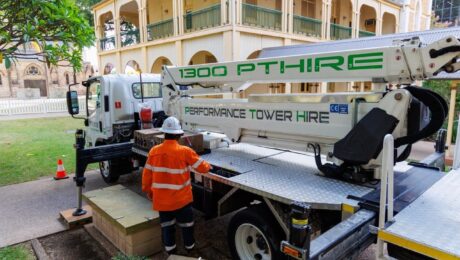
You may want to book in early at Performance Tower Hire if you need PTH281, a Cela DT 28, operating on your work site. It’s become a firm favourite amongst new and returning clients, and for good reason.
This truck-mounted EWP is one of the most versatile units in our fleet. It’s adaptable to a wide range of tasks, thanks to its impressive working height and cherry picker outreach. These features are complemented by a compact design and seamless maneuverability, making it adaptable to a variety of work situations.
Whether you’re a construction team or a crew of arborists, the height and mobility of the Cela DT 28 could be the right fit for your next job. Let’s see why.
Powerful Reach, Compact EWP
This is the defining feature that operators love about this elevated work platform: it can get to serious heights without compromising on reach. Check out these specifications:
- Working height: 28 metres
- Maximum horizontal outreach: 14 metres
- Up and Over capability: 16 metres
- Platform capacity: 350 kg
With a 350kg platform capacity, two operators can comfortably use their equipment at heights. This takes care of a large portion of jobs contractors will encounter.
Tight Access? No Problem
Job sites don’t always have room for large EWPs to access and manoeuvre around. Landscaped properties can limit truck positioning, urban infrastructure can be in tight spots and construction sites can have limited access points.
Mounted onto a compact Isuzu truck, the Cela DT 28 is one of the more adept EWPs at accessing tight areas. Here are its dimensions:
- Overall length: 7.6 m
- Overall width: 2.0 m
- Travelling height: 2.5 m
- Machine weight: 6.5 tonnes
It’s a tidy footprint that makes it easy to move between job sites regularly and operate in locations that larger trucks can’t access.
Stability Equals Safety
When you’re working at a height close to 30 metres above the ground, stability is essential. You want to have confidence in your EWP – a wobbly setup definitely isn’t going to give you that.
PTH281 uses a 3.8 m x 3.8 m outrigger spread to provide a stable operating base. It’s a manageable setup area that still allows the cherry picker to operate across a wide area. Narrow roadside locations, driveways and small worksites – all of these will be able to accommodate the outriggers.
Advanced Platform Controls
At Performance Tower Hire, we receive a lot of positive feedback from operators about the Cela DT 28’s platform controls. The positioning options and the controls let them work efficiently and safely while up in the air, while enjoying the following platform features:
- Platform size: 1.8 m x 0.8 m
- Platform rotation: 160 degrees
- Turntable rotation: 360 degrees
The rotating platform and full turntable movement allow for position adjustment without having to move the truck regularly. The precise positioning required for working at heights is part and parcel of this EWP.
Who Commonly Hires PTH281?
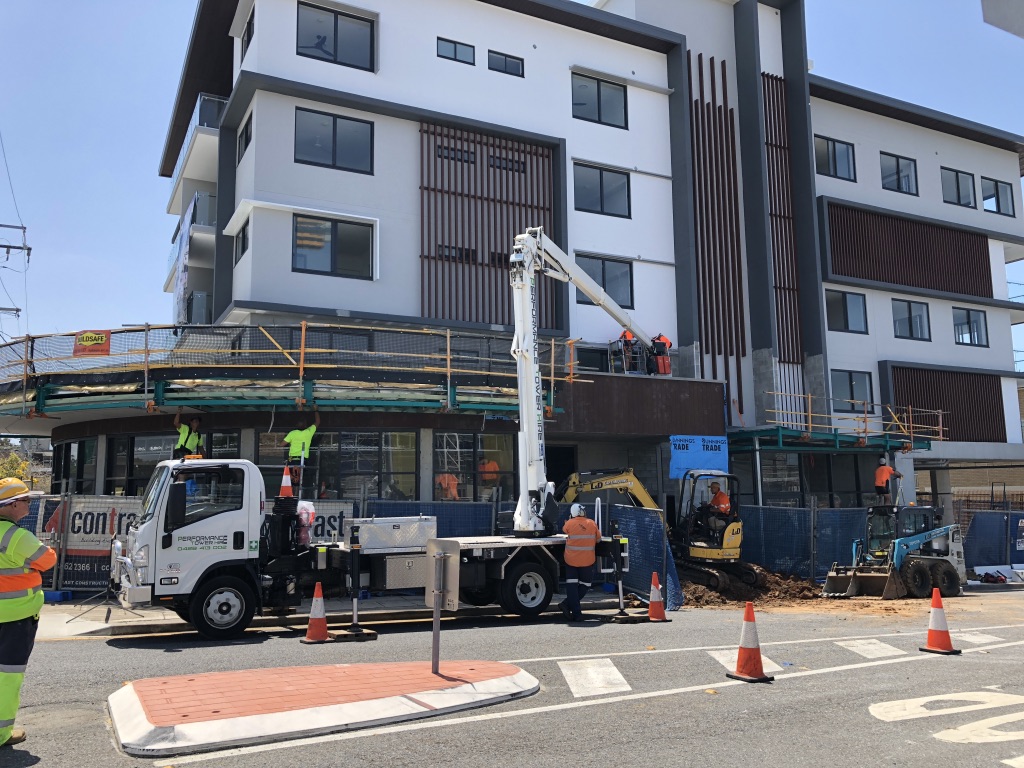
We get requests for PT281 from a wide range of industries across Brisbane and SEQ. It’s a suitable machine for residential and commercial environments, making it popular with:
- Tree loppers
- Building maintenance
- Electrical and lighting installation
- Signage work
- Roof and gutter repairs
- Property maintenance
- Construction work.
The Benefits of Truck-Mounted EWPs
We have a wide range of truck-mounted EWPs at Performance Tower Hire, covering working heights from 16 metres to 54 metres. Contractors will opt for one of them over a trailer-mounted or self-propelled boom lift for several reasons. These include:
- Faster setup and pack down
- Easy transport between sites
- Greater reach compared to many trailer units
- Reduced need for additional transport equipment
If you have to get to several jobs in a single day, having the right truck-mounted EWP on your side will be the seamless way to take care of them all.
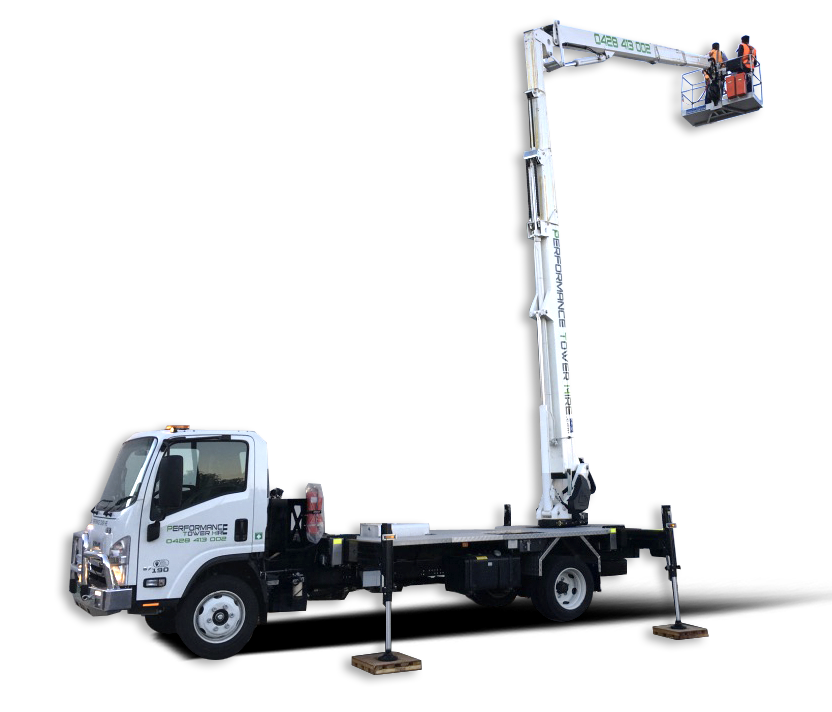
Cela DT 28: Italian Engineering
The Italians sure know how to make a good EWP boom system, and the Cela DT 28 is no exception. Cela is known for producing high-performance truck-mounted platforms manufactured in Italy and used worldwide. That pedigree shines through in this EWP.
It’s crafted with experience and sensible logic so the overall weight is manageable, and it can be mounted on medium-duty trucks without sacrificing performance. That’s how we get a versatile machine that can be used in a multitude of different site conditions, and that’s why the Performance Tower Hire phone runs hot with booking requests for PTH281.
Contact Performance Tower Hire For Your EWP Needs
Performance Tower Hire operates the PTH281 as part of its specialised fleet of elevated work platforms. Serviced regularly and available in a wet hire or dry hire option, these are reliable machines for SEQ and Brisbane businesses.
PTH is well-suited to contractors who require:
- Strong working height
- Good horizontal reach
- Reliable access in tighter locations
- Fast mobilisation between jobs
It’s a practical and efficient solution, but if it doesn’t fit your exact needs, we do have multiple other options for you. Our team is here to run through them for you, so don’t hesitate to get in touch if you have any questions.
When a business is looking to hire an EWP, the first specification they consider is usually the job height.
That’s fair – if your EWP can’t reach the necessary height, it’s not much use. But there’s another factor that is just as important: site access.
Work sites may have access restrictions that limit the type of elevated work platform that can be used there. You need to know whether the machine can reach the job before it arrives on site, or your day is going to get off to a very slow start while you wait for the right machine – if it’s available.
In this article, we’re going to look at typical access restraints you might face, and discuss how to plan around them to avoid job delays.
Access Planning Is Critical
Do your access planning right, and your EWP hire job is likely to go off without a hitch. Delivery and operations will be seamless. That’s not going to be the case if your machine can’t make it onto the worksite, or can’t be set up safely where you need it to operate.
Productivity comes to a halt, and you have to deal with:
- Delayed works and rescheduled trades
- Additional hire or transport costs
- Last-minute machine substitutions
- Increased safety risk
It’s not the fault of the elevated work platform. It’s down to incomplete site information provided during the booking process.
Type of EWP Site Access Constraints
Here’s a breakdown of the various access issues you could face at a commercial, industrial or construction site with your EWP.
Restricted Entry Points
Getting the machine onto the site is usually the first problem to solve.
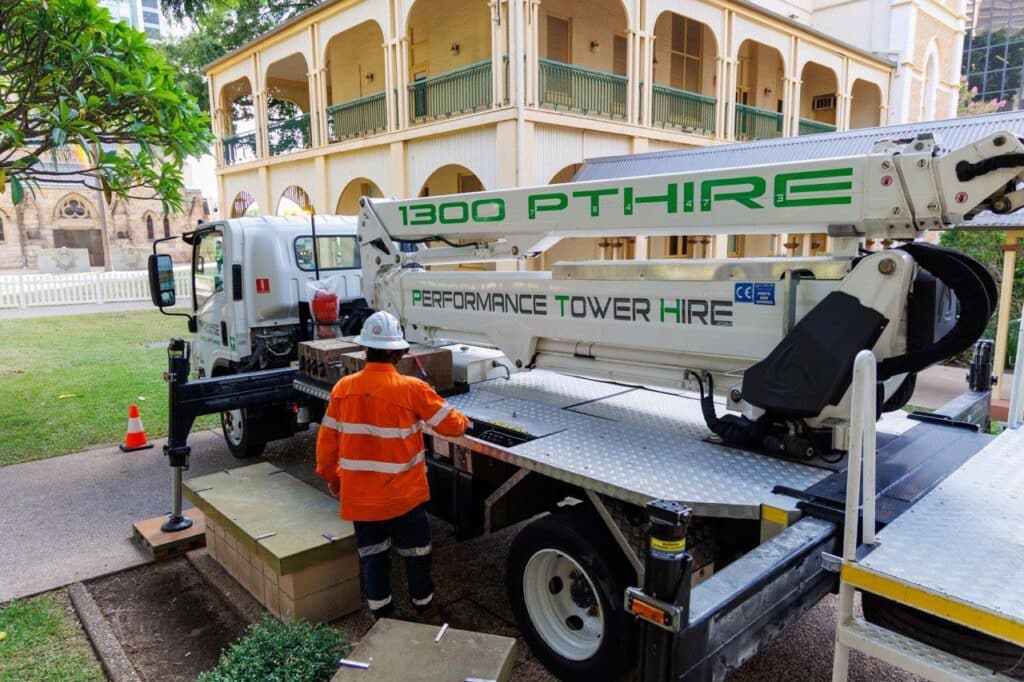
Narrow side access, low clearance points and tight internal routes can rule out certain sizes or models of EWP. You need to measure gate widths, doorways and turning circles accurately and with the whole machine in mind. Handrails, control boxes and tyre width have caught out plenty of operators who didn’t include them in their measurements.
Sites with access restrictions usually require compact or tracked EWP machines over truck-mounted ones. Get your measurements in early and allow for the right tolerances and you’ll get your EWP selection right the first time around.
Ground Conditions and Load Capacity
Ground bearing capacity is often overlooked. Just because a surface looks solid doesn’t mean it can take a heavy load.
Suspended slabs, landscaped areas and older industrial floors could have limitations that aren’t immediately obvious. The wheels and outriggers of an EWP concentrate a lot of weight, meaning even a relatively small machine could exceed what a surface can safely bear.
Pavers, decorative concrete and turf are also vulnerable to damage when ground pressure isn’t managed.
If there’s any doubt about the ground bearing capacity, you may want to get engineering sign-off before your EWP arrives.
Overhead Constraints
The safe operation of an EWP can be seriously impeded by overhead obstructions. Things like powerlines, tree branches and signage can limit the boom articulation and reduce effective working range. Electrical hazards, in particular, will require large workaround distances.
When you’re in the planning phase of hiring an EWP, we recommend you perform a solid review of overhead obstructions on site. Figure out the safe areas to work and how to manoeuvre around the obstacles – then you can laser in on the right machine for your job.
Setup and Operating Space
You’ve successfully got your EWP inside the site perimeter. That’s a good first step, but it’s not the end of your access issues. Many machines require additional space to deploy outriggers or articulate the boom. A unit that fits through an entry point may still be unsuitable if there isn’t enough space for it to operate on site.
If you’re operating on a confined work site, you need an EWP designed for such environments.
Delivery and Transport Limitations
You’ve assessed your site and decided on the perfect machine to get the job done. Now, have you thought about the delivery of the EWP? Is there anything that may hinder it from getting to the site itself – narrow roads, steep driveways, low bridges?
These can complicate transport and unloading. If you’re smack in the middle of a city, you need to bear in mind loading zone availability and traffic management requirements too.
Figuring out the best delivery route and access times can make for a seamless delivery day.
Environmental and Surface Conditions
Site accessibility depends on factors such as weather and surface conditions.
Wet ground, soft surfaces and sloping terrain can restrict machine movement and become a safety hazard too. Wind power when working at heights is another factor to consider – if it exceeds the EWP manufacturer’s operating limits, it’s not safe to continue working.
Planning Access Correctly
Most access issues are preventable if you plan well and provide accurate information to your EWP hire company.
Details such as the following will go a long way towards streamlining delivery, access and setup of your hired elevated work platform.
- Clear site photos showing access paths and work areas
- Accurate measurements of entry points and clearances
- Information on ground construction and surface types
- Details of overhead obstructions
This data allows us to match the right machine to the site conditions.
Contact Performance Tower Hire For Your Next EWP Job
It’s rare for EWP access issues to be completely unavoidable. At Performance Tower Hire, we’re here to work with you to land on the right machine for your job. By working together and communicating well during the access planning phase, we ensure your jobs run smoothly and get completed on time. You’ll have more time on your hands to move on to the next one!
Get in touch today. Let’s get your team up and working.
- 1
- 2
