You’ve quoted the job, booked the cherry picker and got it on site. Then you realise it’s short on height, or the outreach won’t get you over the obstruction in front of it. Now you’re re-quoting, re-booking, and explaining the delays to a client who was told the job would be done today.
At Performance Tower Hire, we do all we can to avoid you under-speccing or over-speccing the cherry picker you hire for your working at heights job. Our team will chat with you about the specifics of the work, and match the machine to the job.
We do this because under-speccing when you hire a cherry picker is one of the most common and most costly mistakes on a job site. It comes about from a range of missteps, from incorrect measurements to overlooked site details.
Here are ten signs that you should double-check your numbers before the cherry picker turns up to your site.
1. You’ve spec’d to the exact height of the job with no buffer
Knowing the height of the parapet, gutter line, or fixing point is the right starting point, but it’s not the only thing. Operators need working room above and around that point to carry out their work – a height buffer makes it safer and easier to do this. If the cherry picker’s working height matches the job height exactly, there’s no margin left once you’re up there.
2. The job needs you to reach over an obstacle
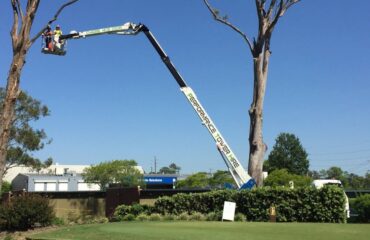
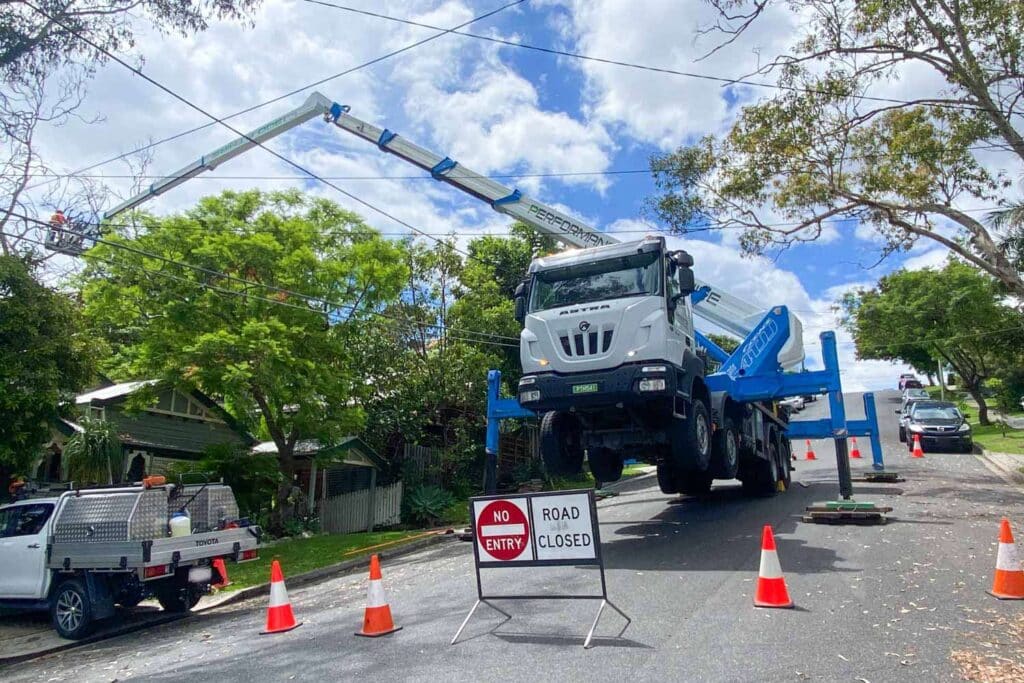
Power lines, awnings, fences, garden beds and other structures can all stand between your cherry picker and where the basket needs to be. If the machine has to stand off and reach out and over an obstacle, outreach is as important as working height. You don’t want a taller machine with a poor radius capability to turn up on site.
3. Your last hire was stretched to its limit
If a previous job needed the operator to stretch the boom to its limit, or the platform couldn’t sit where the work actually was, that’s a sign the spec was already too tight. You’re missing the buffer we discussed in Point 1. It’s definitely worth upsizing to a bigger cherry picker when you tackle the job again.
4. Site access restricts where the machine can set up
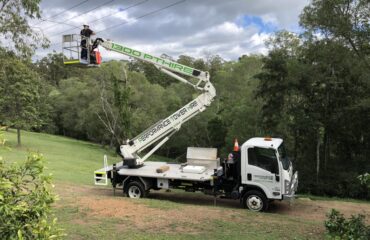
Some sites won’t allow the machine to park directly under the work area. Narrow driveways, gardens, live traffic, or other equipment already in place can all affect where you can park. When the machine has to work from further back, you need more radius and more height to cover the same job.
5. You’re working off old photos or plans and not a current site measure
Worksites change dramatically over time. Buildings get extensions, trees grow, structures get added. Don’t try and spec the cherry picker you need to hire based on last year’s site visit, or a set of plans that don’t reflect what’s actually there no. This is a common way EWP hire jobs end up under-quoted.
6. More than one person needs to be in the platform
What was thought to be a one-person job suddenly becomes a two-man job. It happens, but having two operators, or an operator plus materials and tools, in the basket changes what cherry picker you need. Platform capacity limits how much weight goes up, and a fully loaded platform can also affect outreach. Check the requirements of the job itself when you’re booking.
7. The job covers structures at different heights
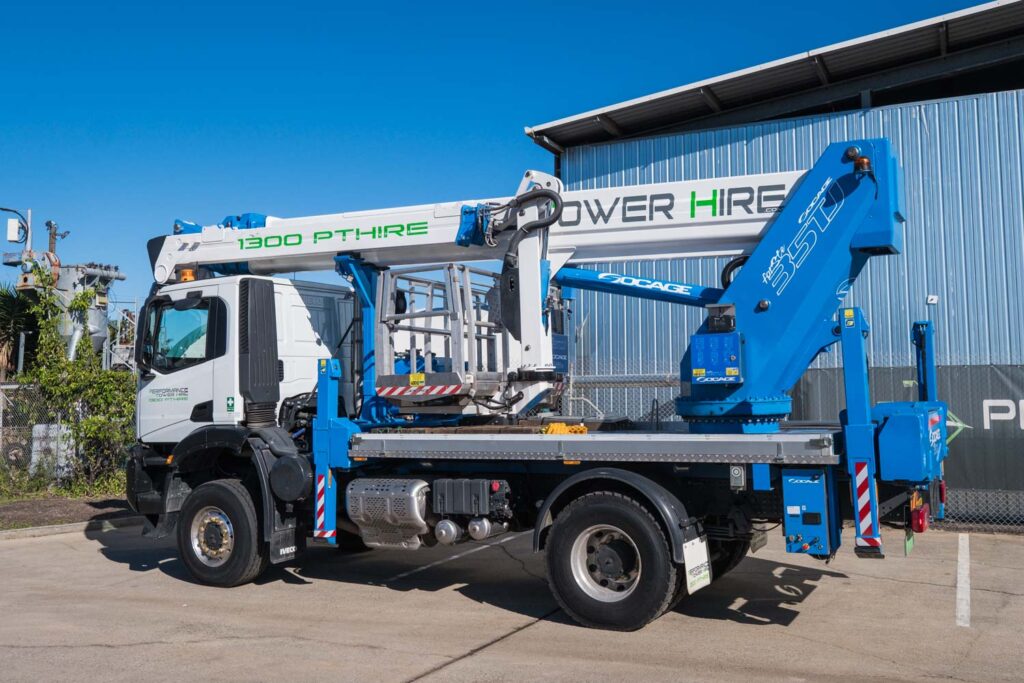
Multi-level roofs, staged construction, or a site with more than one elevation point to cover are all part and parcel of working at heights. Here’s something to bear in mind – it’s more efficient to spec for the tallest point once than to bring a second machine back for the parts the first one couldn’t reach.
8. There’s no room for a second attempt
Some jobs are very timing-specific. Weather windows, live traffic management, event bump-ins, or approvals that only allow access on a set day can all mean the job has to get done on the day. If that’s the case, it’s worth having more machine than the bare minimum calls for.
9. You’re comparing machines on working height alone
Working height gets all the attention, but platform capacity and radius decide whether a machine can actually do the job once it’s on site. Two machines with the same height figure can perform very differently once outreach and load come into it.
10. The cost gap between “just enough” and “comfortably enough” is small
A bigger machine is often a modest difference in hire cost, especially against the cost of a wasted day, a re-quote, or a crew standing around waiting for the right gear to arrive. Sometimes it pays off to pay a bit more.
A Cherry Picker for Every Reach
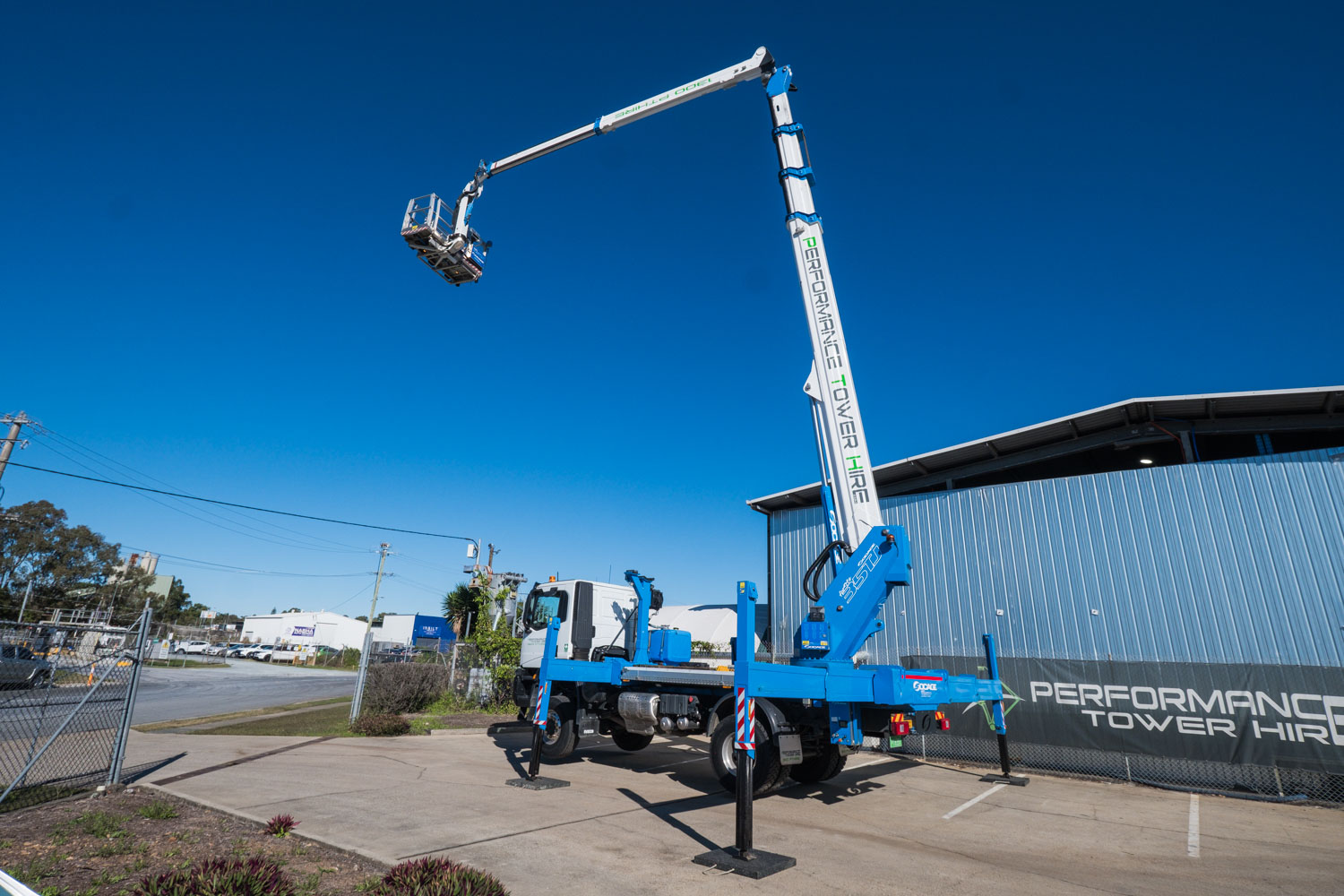
Once the spec is right, the Performance Tower Hire fleet has a range of different size machines that can cover what you need to do. These include:
54 metres working height
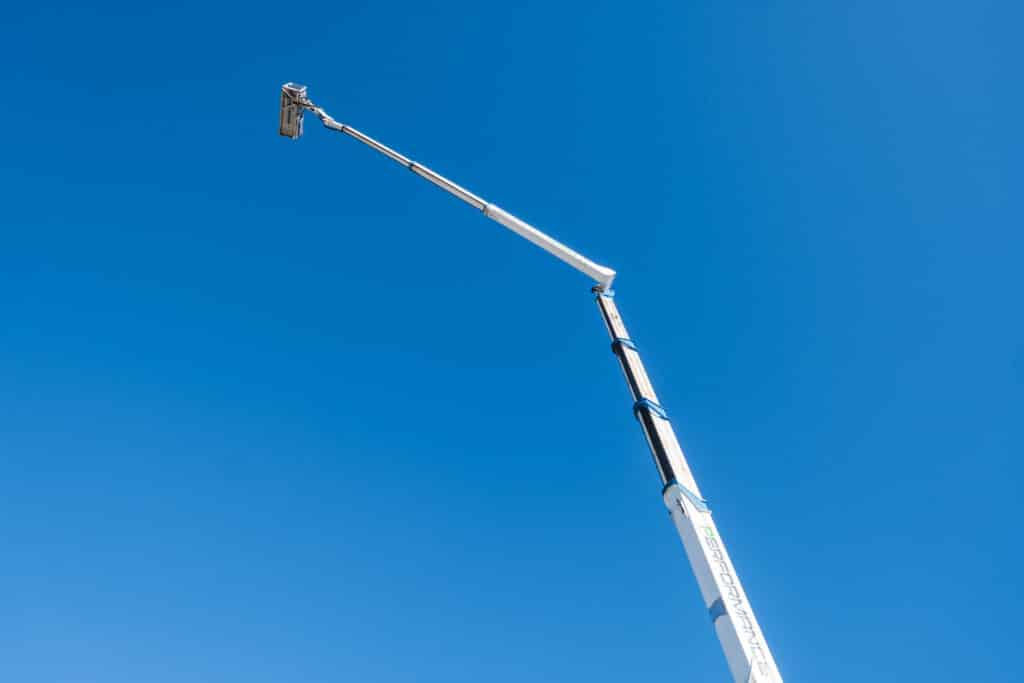
PTH541: 54m working height, 40m radius, 600kg platform capacity. The top of the fleet, built for jobs where nothing smaller will get you there — high-rise facade work, major infrastructure, and telco tower maintenance.
43 metres working height
PTH431: 43m working height, 18m radius, Palazzani spider lift. Tracked rather than truck-mounted, so it sets up on uneven ground or in tight spaces where outriggers can’t spread out. A strong option when access, not height, is the limiting factor.
30 metres working height
PTH301: 30m working height, 16m radius, 400kg platform capacity. A dependable mid-range machine on a Mercedes Benz 4×4 chassis, well suited to construction and commercial maintenance work that needs solid reach without going to the largest units.
20 metres working height
PTH201: 20m working height, 11m radius, 225kg platform capacity. Compact and manoeuvrable, a good fit for residential work, signage, and jobs where a smaller footprint matters as much as the height itself.
Get the Spec Right Before You Book
If you’re not sure whether your job needs a bigger cherry picker than you’ve been quoted, it’s worth having a conversation with a Performance Tower Hire team member. We will talk through the site details with you and ensure you land on the right unit the first time.
Find out more details on our cherry picker hire page, or get in touch for a free quote. If you want to chat right now, call us 1300 784 473. We’re always happy to help you get the right EWP for your job, and also decide whether wet hire or dry hire suits best.
Chat soon.