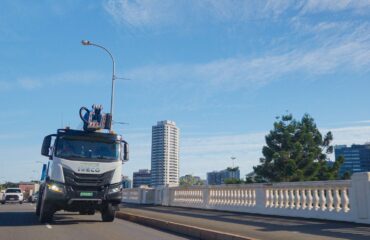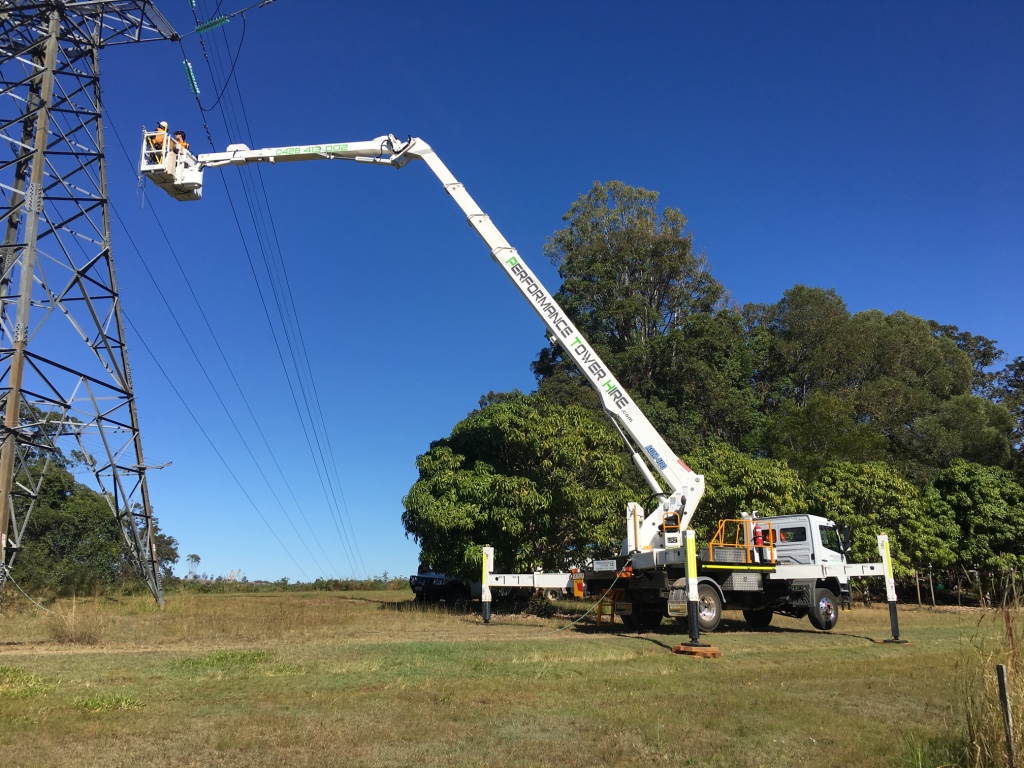
The risks of powerlines are drummed into us at a young age. The huge volumes of electrical current running through them present a significant danger to human life. For operators using a truck-mounted EWP, or any working-at-heights platform, the risk profile increases significantly.
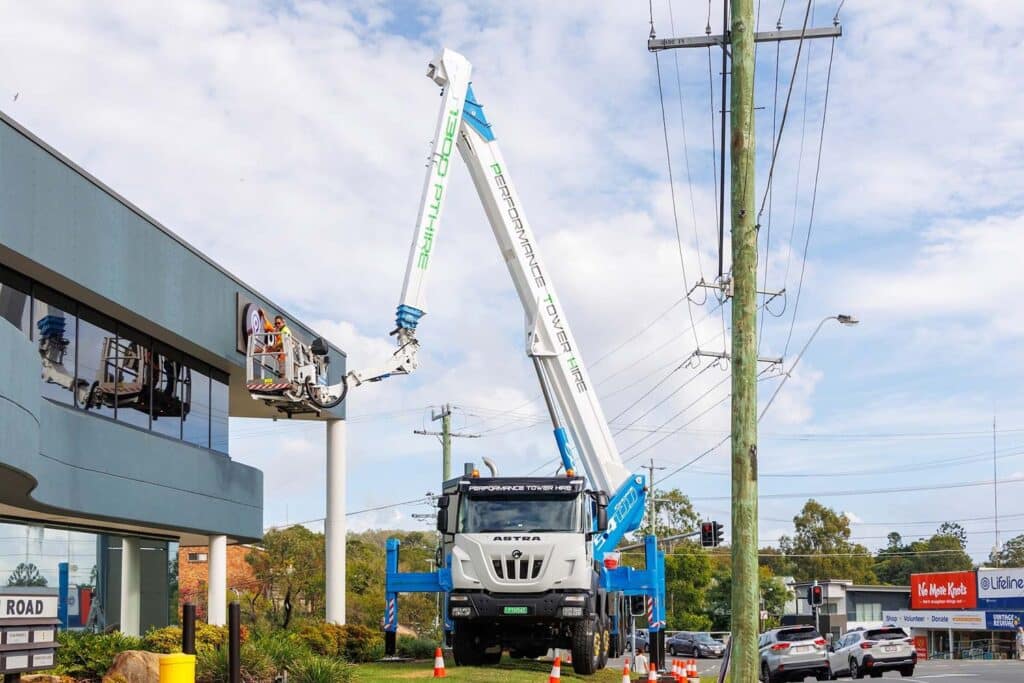
The boom places them in areas ground-based workers don’t reach, and often that’s in close proximity to power lines. This could be on a building site, in a residential space or within a suburban setting.
If you’re a site manager or contractor and you’ve got questions about powerlines and EWP use, the below guide will answer them. If not, our Brisbane hire team is always available for advice, give us a ring on 1300 784 473.
Why Powerlines and EWPs Are a High-Risk Combination
Powerlines are visible and stationary, but they have an invisible danger zone around them. Electrical arcing can take place before an object actually touches the cable. This means an operator, or the boom or basket, can get shocked without making physical contact with the line.
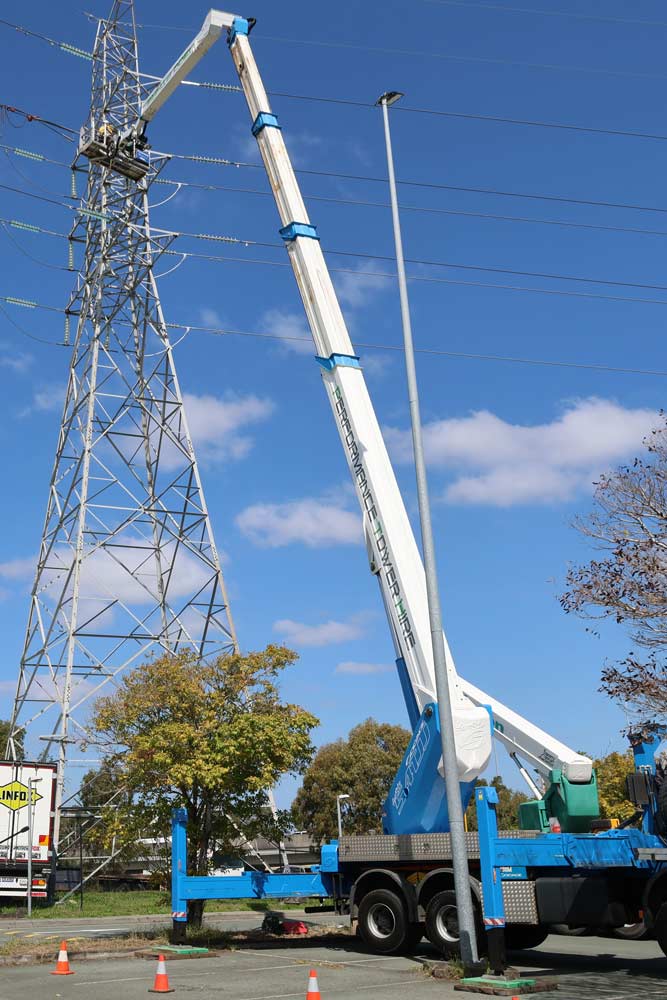
Your cherry picker puts an operator well into the vicinity of powerlines. The whole point of the machine is to get up high. Whether you’re working on a suburban Brisbane treelopping job or on a commercial building site near high-voltage transmitters, you need to be aware of exclusion zones and have the right personnel on the job. Active management and observation of safety protocols before and during operations is essential.
AS 2550 and What It Means
AS 2550 is the Australian standard governing the safe use of cranes and EWPs. It sets out minimum approach distances for working near powerlines, with exclusion zones that vary depending on the voltage of the line in question.
The key takeaway for site managers is:
- There are defined distances within which an EWP cannot operate without specific controls in place.
- Those distances are not one-size-fits-all – a standard street-level powerline and a high-voltage transmission line carry very different requirements.
For site-specific guidance on voltages and exclusion zones, you can speak with the Performance Tower Hire team. Our operators are all up to date with the correct safety standards.
Who Is Responsible on a Queensland Construction Site?
Under Queensland’s Work Health and Safety Regulation 2011, responsibility doesn’t sit with one party. The principal contractor, the hirer, and the operator all assume some level of responsibility.
Principal Contractor
The principal contractor has to identify and manage the hazard before work begins. That means identifying powerline locations and voltages and establishing exclusion zones as part of the site safety plan. This all needs to be communicated to the relevant parties before EWP deployment.
The EWP Hirer
The hirer is responsible for ensuring the machine and operator are appropriate for the task. If the job involves working near powerlines, the hirer needs to brief the operator on site-specific hazards before work starts. Handing over the keys and walking away doesn’t discharge that obligation.
The EWP Operator
The operator carries their own duty of care regardless of instructions from above. They are responsible for not entering exclusion zones and for raising concerns about anything that puts them or others at risk. An experienced operator who regularly works near powerlines knows where the line is, in every sense.
There’s no outsourcing of responsibility when it comes to EWPs and powerlines. All parties need to be engaged and aware of the work being undertaken.
The Wet Hire Solution
Dry hire puts a machine on your site. Wet hire puts a machine and an experienced operator on your site. When powerlines are in the picture, this is an important distinction.
It comes down to knowledge and experience – a licensed Performance Tower Hire operator who works regularly on SEQ construction sites understands exclusion zone requirements, knows how to position the machine to maximise safe working radius, and knows when to stop.
Also, all our operators are M31A qualified and we can provide approved spotter services where the job requires a second set of eyes on the ground.
If you’re a contractor and you want the confidence that EWP work in the vicinity of a powerline is being handled by someone who does this for a living, wet hire is the best choice for you. You still have the burden of compliance, but you can rest assured the competency side of things is being taken care of by Performance Tower Hire.
Working at Height Near Powerlines? Follow These Steps.
Before the machine arrives on site, work through these steps:
- Identify any powerlines on or next to the site. Remember those on neighbouring properties could fall within the boom’s radius.
- Establish exclusion zones in the site safety plan based on AS 2550 requirements for the relevant voltage.
- Brief the operator on powerline locations and exclusion zones before work begins.
- Confirm whether a spotter is required and have that person in position before the boom goes up.
- Have a clear stop-work protocol in place if conditions change, including unexpected line movement in wind.
These aren’t complicated steps. Safety on site comes in being consistent about implementing them.
Talk to Performance Tower Hire Before Your Next Job
If your next Brisbane or SEQ job puts an EWP anywhere near powerlines, it’s worth a conversation before you book. We can talk through which machine is best for your job and whether you should be looking at wet hire or have the internal capacity for dry hire.
Get in touch today and let’s get the conversation started. Your safety on site is our biggest priority, particularly when you’re working near powerlines. You can reach us here or on 1300 784 473.