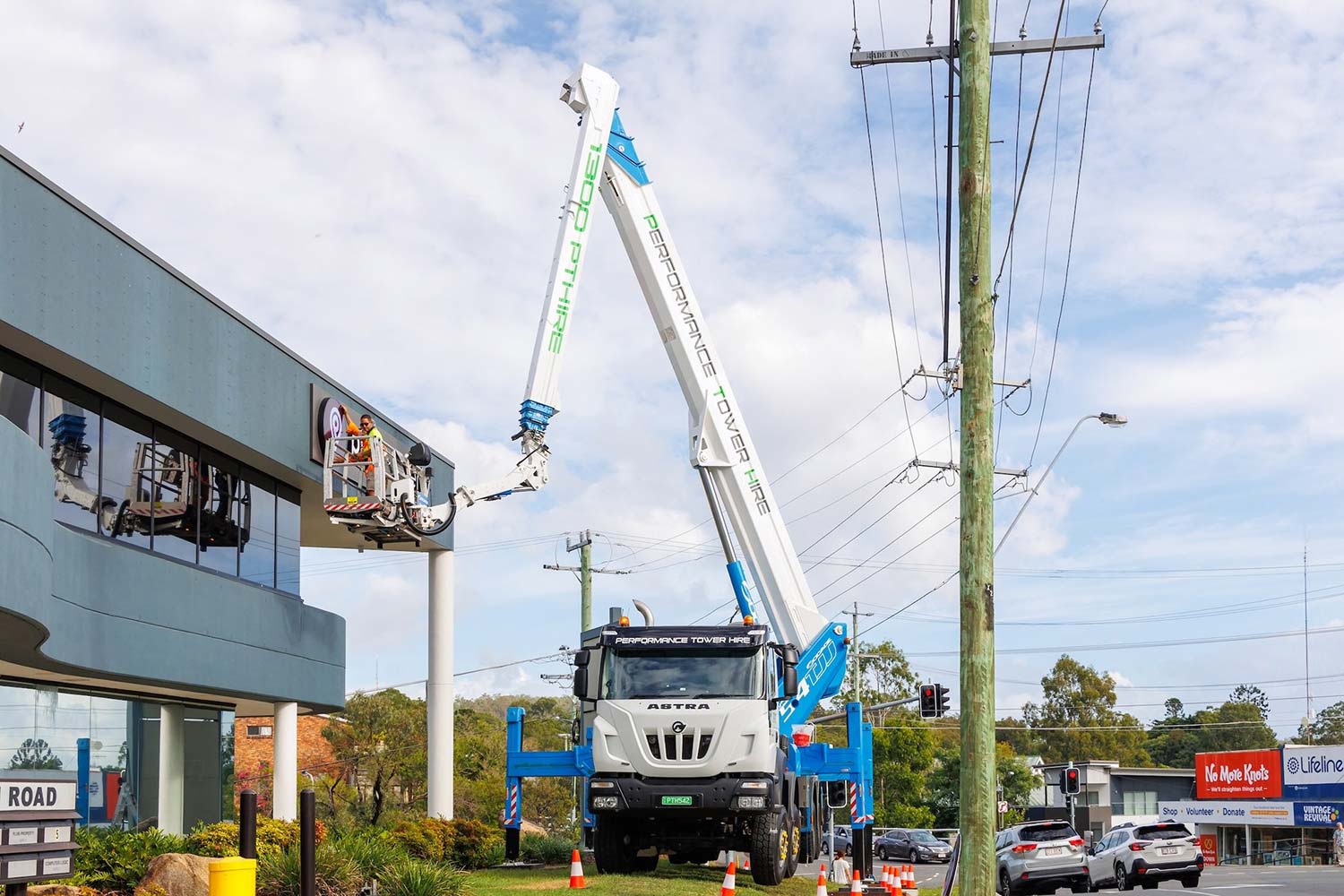
When a business is looking to hire an EWP, the first specification they consider is usually the job height.
That’s fair – if your EWP can’t reach the necessary height, it’s not much use. But there’s another factor that is just as important: site access.
Work sites may have access restrictions that limit the type of elevated work platform that can be used there. You need to know whether the machine can reach the job before it arrives on site, or your day is going to get off to a very slow start while you wait for the right machine – if it’s available.
In this article, we’re going to look at typical access restraints you might face, and discuss how to plan around them to avoid job delays.
Access Planning Is Critical
Do your access planning right, and your EWP hire job is likely to go off without a hitch. Delivery and operations will be seamless. That’s not going to be the case if your machine can’t make it onto the worksite, or can’t be set up safely where you need it to operate.
Productivity comes to a halt, and you have to deal with:
- Delayed works and rescheduled trades
- Additional hire or transport costs
- Last-minute machine substitutions
- Increased safety risk
It’s not the fault of the elevated work platform. It’s down to incomplete site information provided during the booking process.
Type of EWP Site Access Constraints
Here’s a breakdown of the various access issues you could face at a commercial, industrial or construction site with your EWP.
Restricted Entry Points
Getting the machine onto the site is usually the first problem to solve.
Narrow side access, low clearance points and tight internal routes can rule out certain sizes or models of EWP. You need to measure gate widths, doorways and turning circles accurately and with the whole machine in mind. Handrails, control boxes and tyre width have caught out plenty of operators who didn’t include them in their measurements.
Sites with access restrictions usually require compact or tracked EWP machines over truck-mounted ones. Get your measurements in early and allow for the right tolerances and you’ll get your EWP selection right the first time around.
Ground Conditions and Load Capacity
Ground bearing capacity is often overlooked. Just because a surface looks solid doesn’t mean it can take a heavy load.
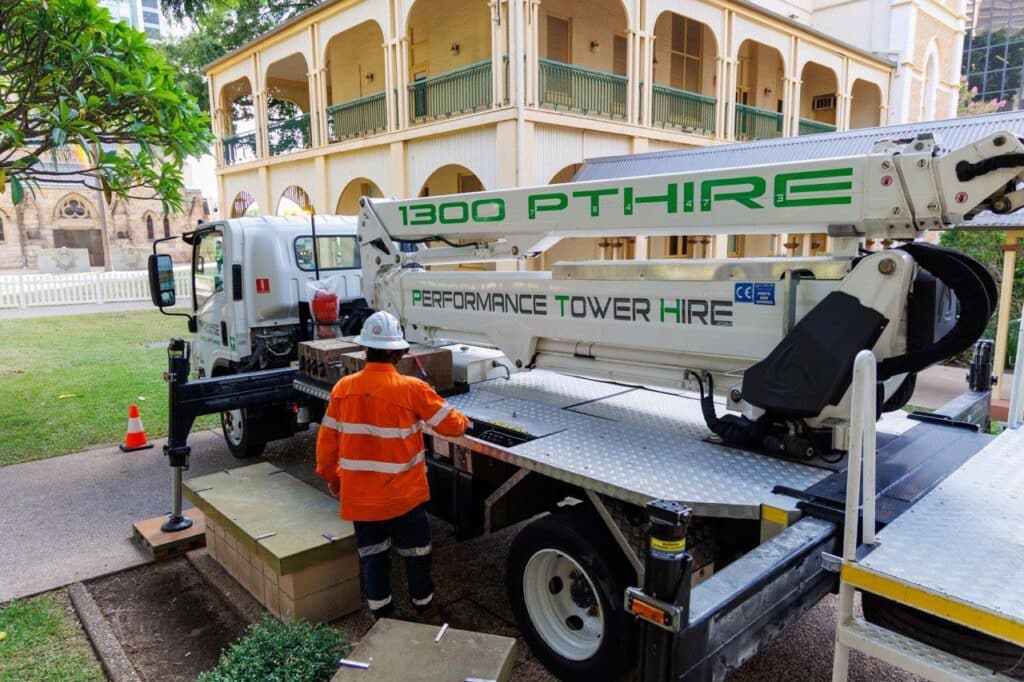
Suspended slabs, landscaped areas and older industrial floors could have limitations that aren’t immediately obvious. The wheels and outriggers of an EWP concentrate a lot of weight, meaning even a relatively small machine could exceed what a surface can safely bear.
Pavers, decorative concrete and turf are also vulnerable to damage when ground pressure isn’t managed.
If there’s any doubt about the ground bearing capacity, you may want to get engineering sign-off before your EWP arrives.
Overhead Constraints
The safe operation of an EWP can be seriously impeded by overhead obstructions. Things like powerlines, tree branches and signage can limit the boom articulation and reduce effective working range. Electrical hazards, in particular, will require large workaround distances.
When you’re in the planning phase of hiring an EWP, we recommend you perform a solid review of overhead obstructions on site. Figure out the safe areas to work and how to manoeuvre around the obstacles – then you can laser in on the right machine for your job.
Setup and Operating Space
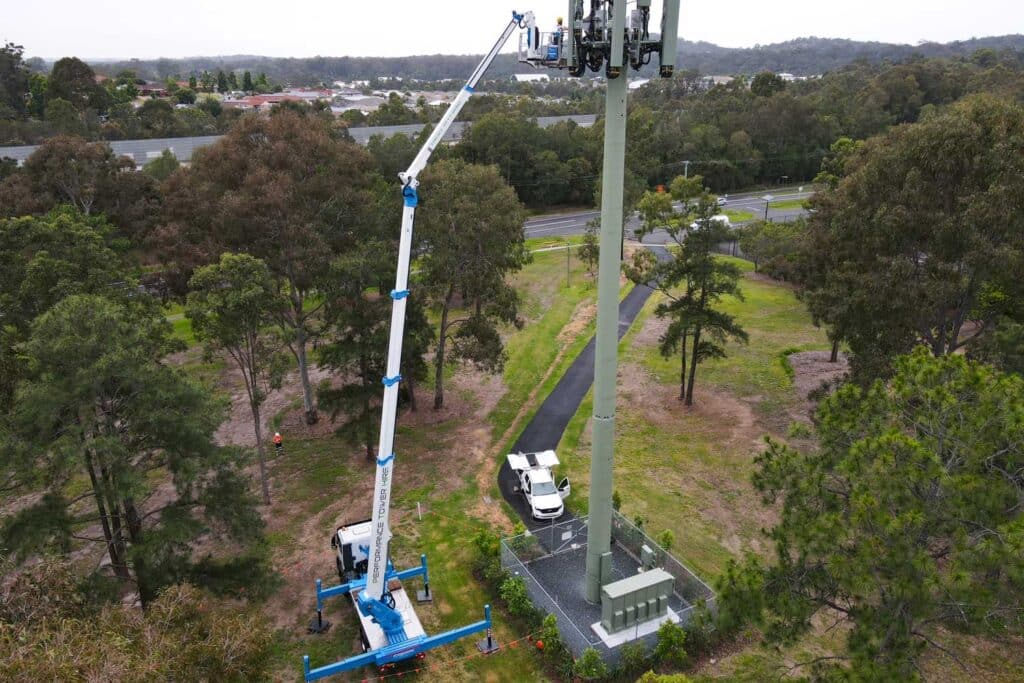
You’ve successfully got your EWP inside the site perimeter. That’s a good first step, but it’s not the end of your access issues. Many machines require additional space to deploy outriggers or articulate the boom. A unit that fits through an entry point may still be unsuitable if there isn’t enough space for it to operate on site.
If you’re operating on a confined work site, you need an EWP designed for such environments.
Delivery and Transport Limitations
You’ve assessed your site and decided on the perfect machine to get the job done. Now, have you thought about the delivery of the EWP? Is there anything that may hinder it from getting to the site itself – narrow roads, steep driveways, low bridges?
These can complicate transport and unloading. If you’re smack in the middle of a city, you need to bear in mind loading zone availability and traffic management requirements too.
Figuring out the best delivery route and access times can make for a seamless delivery day.
Environmental and Surface Conditions
Site accessibility depends on factors such as weather and surface conditions.
Wet ground, soft surfaces and sloping terrain can restrict machine movement and become a safety hazard too. Wind power when working at heights is another factor to consider – if it exceeds the EWP manufacturer’s operating limits, it’s not safe to continue working.
Planning Access Correctly
Most access issues are preventable if you plan well and provide accurate information to your EWP hire company.
Details such as the following will go a long way towards streamlining delivery, access and setup of your hired elevated work platform.
- Clear site photos showing access paths and work areas
- Accurate measurements of entry points and clearances
- Information on ground construction and surface types
- Details of overhead obstructions
This data allows us to match the right machine to the site conditions.
Contact Performance Tower Hire For Your Next EWP Job
It’s rare for EWP access issues to be completely unavoidable. At Performance Tower Hire, we’re here to work with you to land on the right machine for your job. By working together and communicating well during the access planning phase, we ensure your jobs run smoothly and get completed on time. You’ll have more time on your hands to move on to the next one!
Get in touch today. Let’s get your team up and working.