Dry hire is a good option if you have a licensed and experienced operator on your team. You’re saving on costs because you’re not paying for a hired operator – but you need to be on top of the responsibilities it involves. Particularly when it comes to safety.
With wet hire, there’s a shared approach to responsibility; when you dry hire an EWP, it falls squarely on your shoulders. You need to understand your safety obligations before the machine gets to site.
The part that catches some hirers off guard is the shift in responsibility. When there’s no operator on site, the safety obligations that would otherwise be shared don’t disappear. They land with you. Understanding exactly what that means before the machine arrives helps the job go smoothly and keeps you on the right side of compliance regulations.
No Hired EWP Operator on Site
When you engage in a wet hire arrangement with Performance Tower Hire, our operator handles a significant portion of the on-site safety work. That includes pre-start inspections, harness checks, spotter coordination and real-time risk assessment as the job progresses. There’s a lot of expertise built into the hire.
With dry hire, those responsibilities transfer to you. You’re legally responsible for managing the risks associated with working at heights – it’s part of the Queensland Work Health and Safety Act. We provide you with the compliant machine, you take care of PPE (Personal Protective Equipment), a licensed operator, pre-start checks, spotters and any other safety protocols.
If you’re an experienced operator you’ve no doubt got this all under control. It’s important we get this information out there though, because the WHS framework doesn’t leave much room for assumptions.
What Performance Tower Hire Takes Care Of
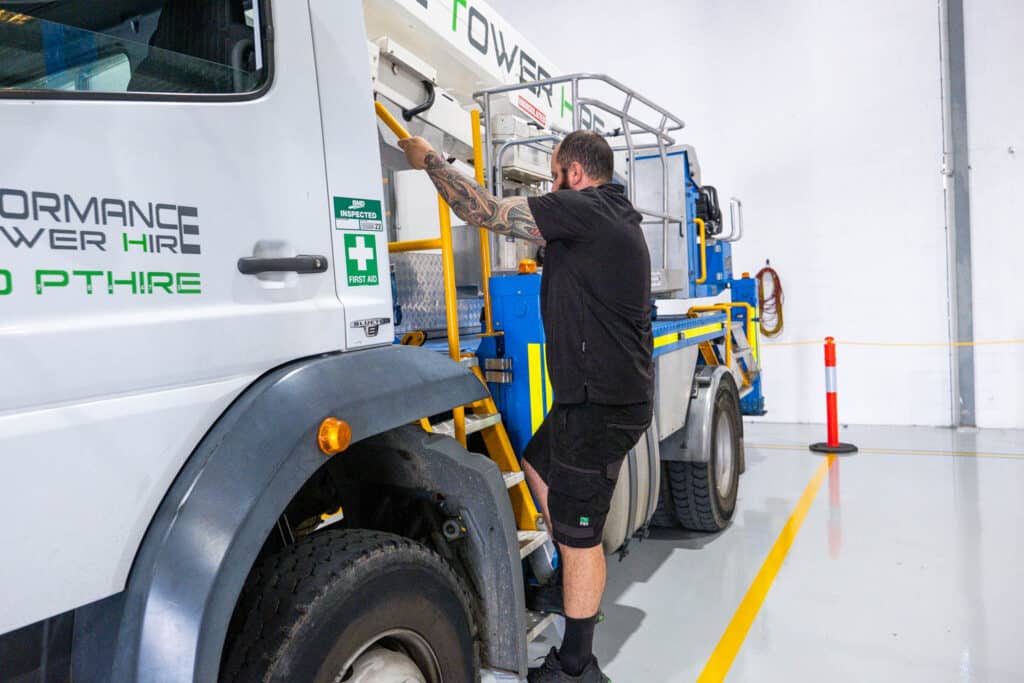
When one of our elevated work platforms leaves the yard on a dry hire, it goes out compliance-ready. Every unit in the fleet is maintained to AS 2550 standards. It carries current service records and goes through pre-delivery checks before it reaches your site. You can rest assured that when it comes to safety, the EWP you’re hiring ticks all the boxes. We have factory-trained technicians on-site keeping our machines in perfect working order. They’re not just safe, they’re reliable too.
What the Hirer Takes Care Of
Let’s take a close look at your safety responsibilities when you dry hire an EWP.
PPE obligations
PPE for EWP work is non-negotiable under Queensland WHS regulations. It’s more than throwing on a hard hat – let’s look at what every EWP operator should have sorted:
Full-body harness and lanyard
A full-body harness is required for all EWP operations. This can’t be a chest harness or a waist belt. Inspect it before each use, fit it to the operator correctly and ensure it’s firmly attached to the EWP anchor point.
Helmet
A safety helmet certified to AS/NZS 1801:2024 must be worn on site. Regular inspections and replacements after any serious knocks are also non-negotiables. Helmets are important all the time, especially when working with overhead hazards like tree branches.
Hi-vis clothing
Hi-vis compliant with AS/NZS 4602.1 is required for most EWP work sites. Class D/N is the right call for the majority of jobs as it covers both daylight and low-light conditions. It’s the standard expectation across construction, civil, and outdoor maintenance work in Queensland.
Safety footwear
The operator must wear steel-capped boots certified to AS/NZS 2210. Slip resistance is a critical feature too – the platform can get s;ippery if there’s any wet around.
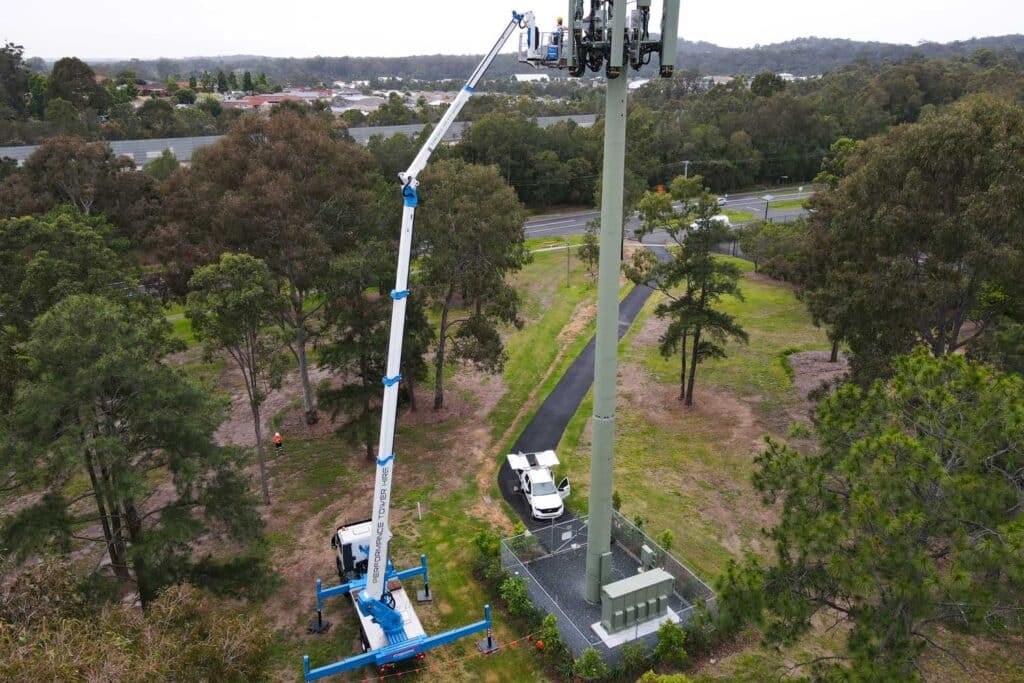
Truck-mounted EWP Best Practice for Safety
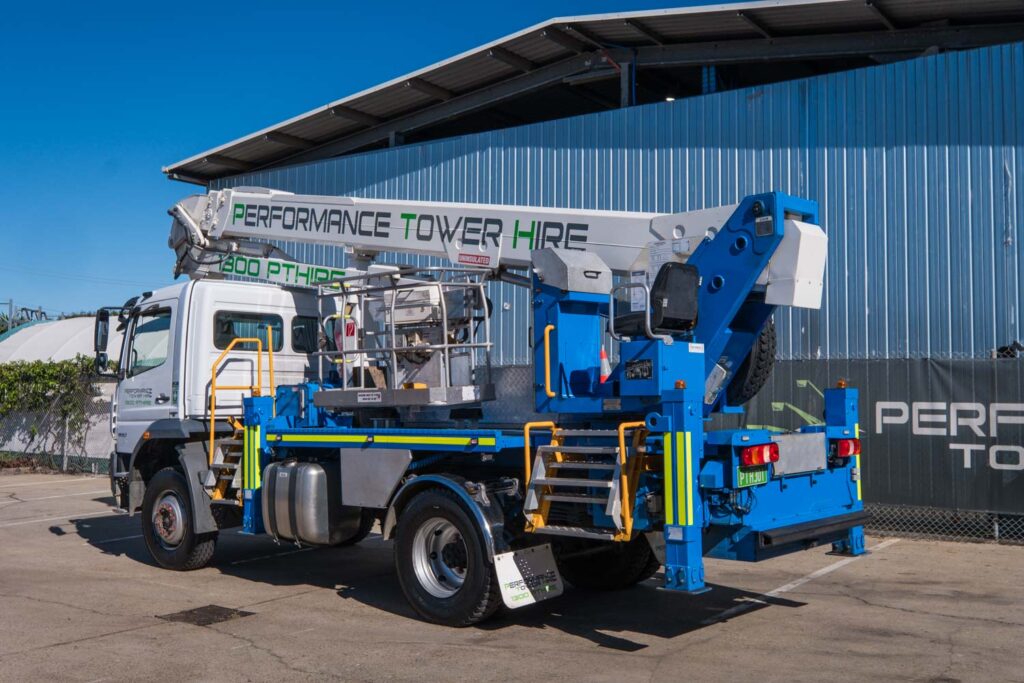
Performance Tower Hire operates truck-mounted EWPs from 16m up to 54m working height. These are serious heights, and serious safety considerations need to be taken. Your properly sized lanyard and correctly positioned anchor point are extremely important in the event of a fall or slip.
Our machines have designated anchor points built to AS 2550 requirements. Before you start on the job, ensure your operator knows where the anchor point is, that the lanyard length is correct and fitment and connection are all done properly. We can’t stress this enough when you’re operating a truck-mounted EWP.
EWP Licencing
Every machine in the PTH fleet has a boom length over 11 metres, which means the WP High Risk Work Licence is required without exception.
Confirm your licence is current before the machine arrives. Too many businesses leave it to the last minute before realising they don’t have a correctly licensed operator.
Pre-start Inspection
Before anyone goes up, a pre-start inspection is required. Here’s what to check:
- Controls are working
- The platform is in decent condition,
- Where the harness anchor points are and if they are secure
- The ground conditions around the outrigger footprint.
A documented risk assessment of the site should also be completed. This needs to cover overhead hazards, ground stability, exclusion zones, and emergency procedures.
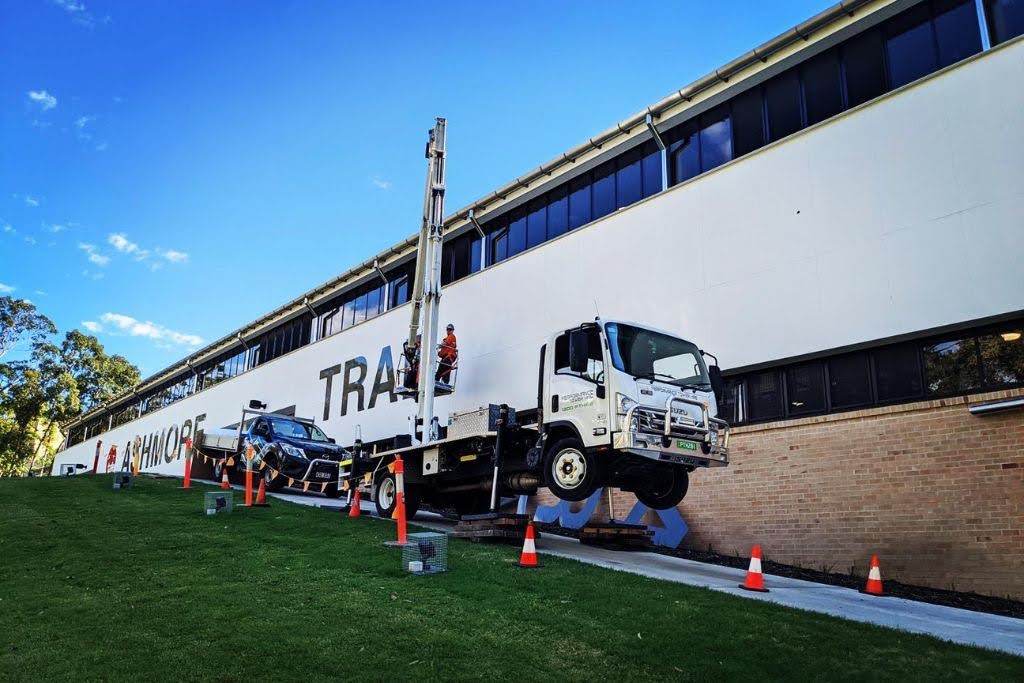
When to turn to wet hire
No matter how experienced your team is there are still situations where wet hire is more suitable. In that kind of situation, having a licensed operator on site removes risk and pressure, while ensuring the job gets completed to a very high standard.
Examples could be jobs with very complex site conditions, or work on a site with tight compliance restrictions. Wet hire could simply be the more efficient and safer method of getting the job done.
Talk to Performance Tower Hire before you book
Not sure whether dry or wet hire is the right fit for your next job? Give us a buzz on 1300 784 473 or get in touch here. We’re happy to talk through what the job needs before you commit to anything. It’s important you get the right machine and the right hiring arrangement for your working at heights job, and we’re here to guide you to that.